Cleaning: Cleaning Masonry
Words: Margaret Foster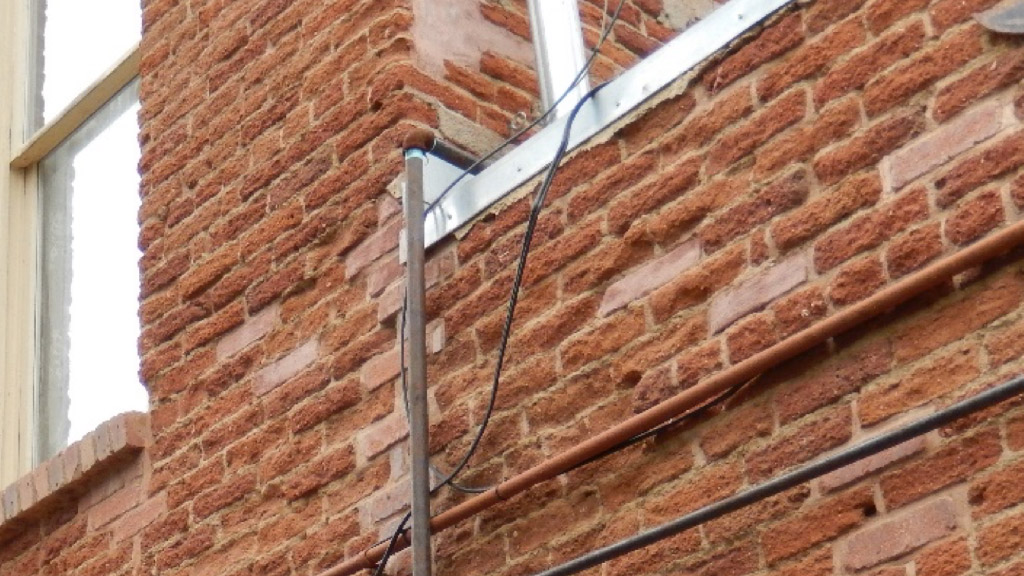
Example of brick damaged by sandblasting.
One of the advantages of masonry as a building material is the relatively small amount of maintenance they require to sustain their aesthetics compared to other materials. There are situations, however, when cleaning masonry surfaces is desired or necessary to maintain their appearance or prevent premature deterioration. Such circumstances may include after construction, or the presence of staining, pollution build-up, efflorescence, and organic growth.
Cleaning Newly Constructed Masonry
Removing mortar or grout stains from newly constructed masonry is one of the most common reasons for cleaning. The most effective method, however, involves construction practices that prevent or minimize the amount of mortar droppings and grout blowouts, and protect the masonry from nearby construction work. The use of clean water and a nonmetallic bristle brush is the preferred cleaning method, especially for concrete masonry and manufactured stone which may be damaged by acidic cleaners. With this method, cleaning can often begin as early as 24 hours after placement. Mortar stains may be cleaned from brick masonry at least 7 days but no longer than one month after placement using a dilute acid solution. Muriatic acid should not be used; instead use a commercial masonry cleaner specific to the substrate and stain to be cleaned, and follow the manufacturer’s recommendations.
Removing Stains from Existing Masonry
Cleaning environmental or human-made stains from existing masonry may be performed by a number of methods, but the gentlest method that effectively removes the stain is best. Aggressive cleaning methods such as sandblasting or pressure washing are likely to alter the appearance of the masonry at least slightly, and may severely damage the masonry if not performed carefully. A skilled, experienced operator is necessary if these methods are used.
As with newly constructed masonry, simply cleaning with water and a nonmetallic bristle brush is the preferred method. Proprietary masonry cleaning products are typically safe and effective, but be sure to select a product appropriate for the masonry material and type of stain, and follow the manufacturer’s instructions. Pre-soaking the masonry with a fine mist prior to cleaning helps to loosen soiling and also helps prevent cleaning products from being absorbed into the masonry. A poultice is a mixture of solvent and inert paste that is applied to a stain to draw it out of the masonry. Any potential cleaning method should be tested first to determine the effect it will have on the appearance of the masonry.
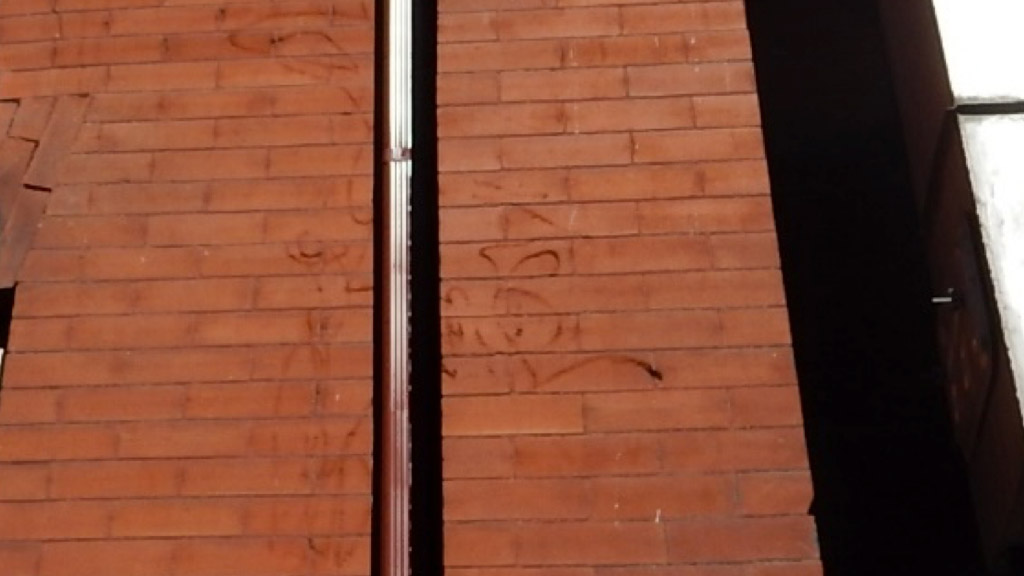
Example of brick scarring left by pressure washing.
Cleaning Historic Masonry
Most recommendations and precautions regarding stain removal from existing masonry also apply to historic masonry, but extra care needs to be taken not to damage historic materials.
Using high-pressure cleaning can be very damaging to historic masonry. Old brick was not manufactured the same way as modern brick, and is usually much softer as a result. Historic lime-based mortar is much softer than modern cement-based mortar. Use of abrasive methods such as sandblasting or high-pressure water will erode and permanently damage these materials.
If pressure washers are to be used to clean historic masonry pressure must be limited and the sprayer must have a 15-degree fan tip (not a needle tip) held 12 inches or more from the wall to avoid damage. Pressures in the range of 60 to 300 psi may be acceptable as determined by sample cleaning at test areas.