The State of Masonry Education for Engineering Students
Words: Donald Alward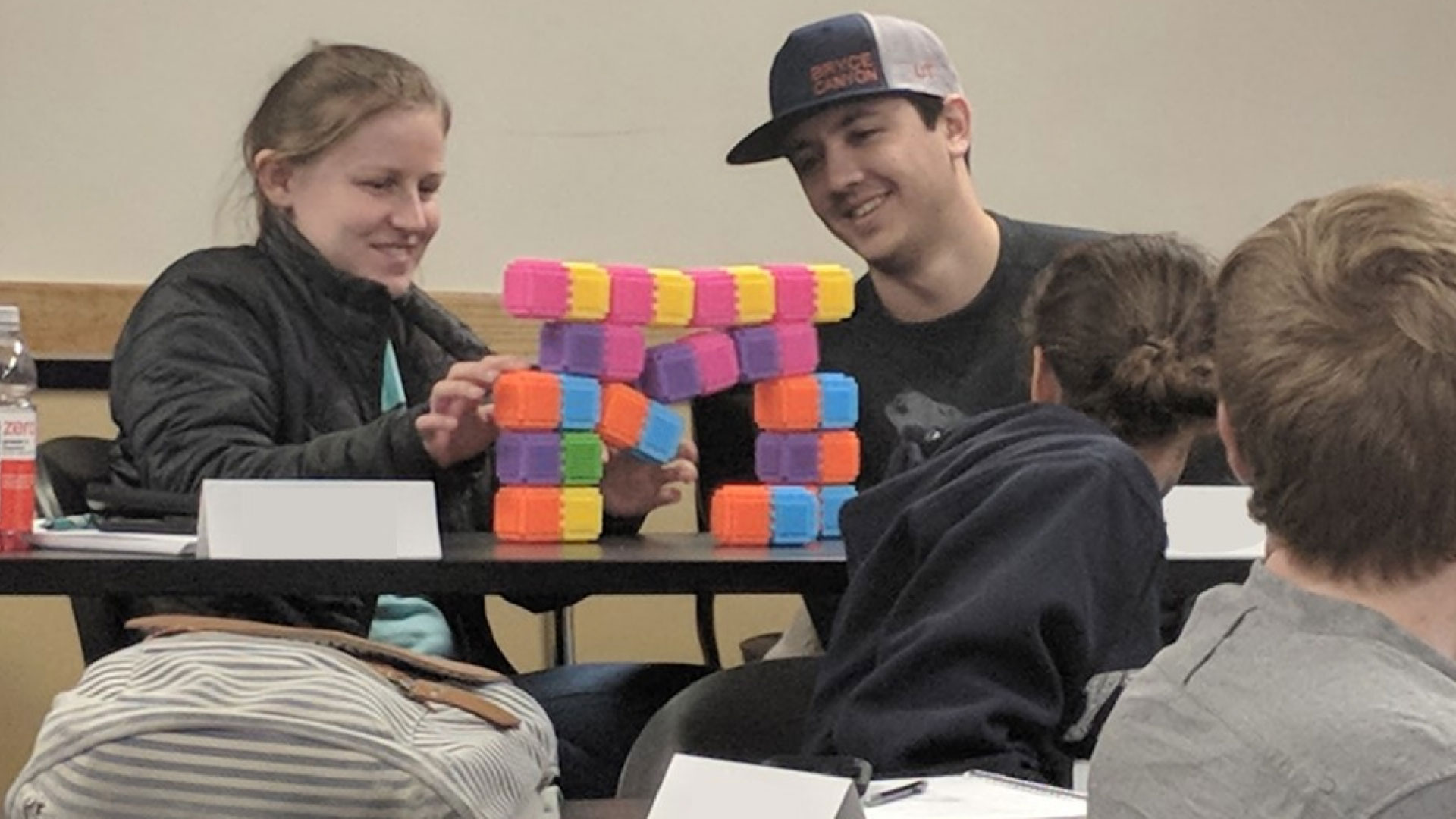
Figure 1. Bar graph from NCSEA article on the Structural Engineering Curriculum Survey (Figure 2 from the article).
We all tend to gravitate towards things that are familiar and comfortable. Perhaps we wear jeans until the holes in the knees are bigger than the holes for the legs, or we prefer to relax in our favorite chair that could be used as a mold to accurately recreate our backside, long after we've stood up. We tend to be comfortable and confident with things that are familiar, and we are often avoid the unfamiliar altogether. This behavior is also often reflected in the engineering design community. Engineers tend to design using materials and methods that they are most comfortable with, and they are most comfortable with materials that they have been taught the most about.
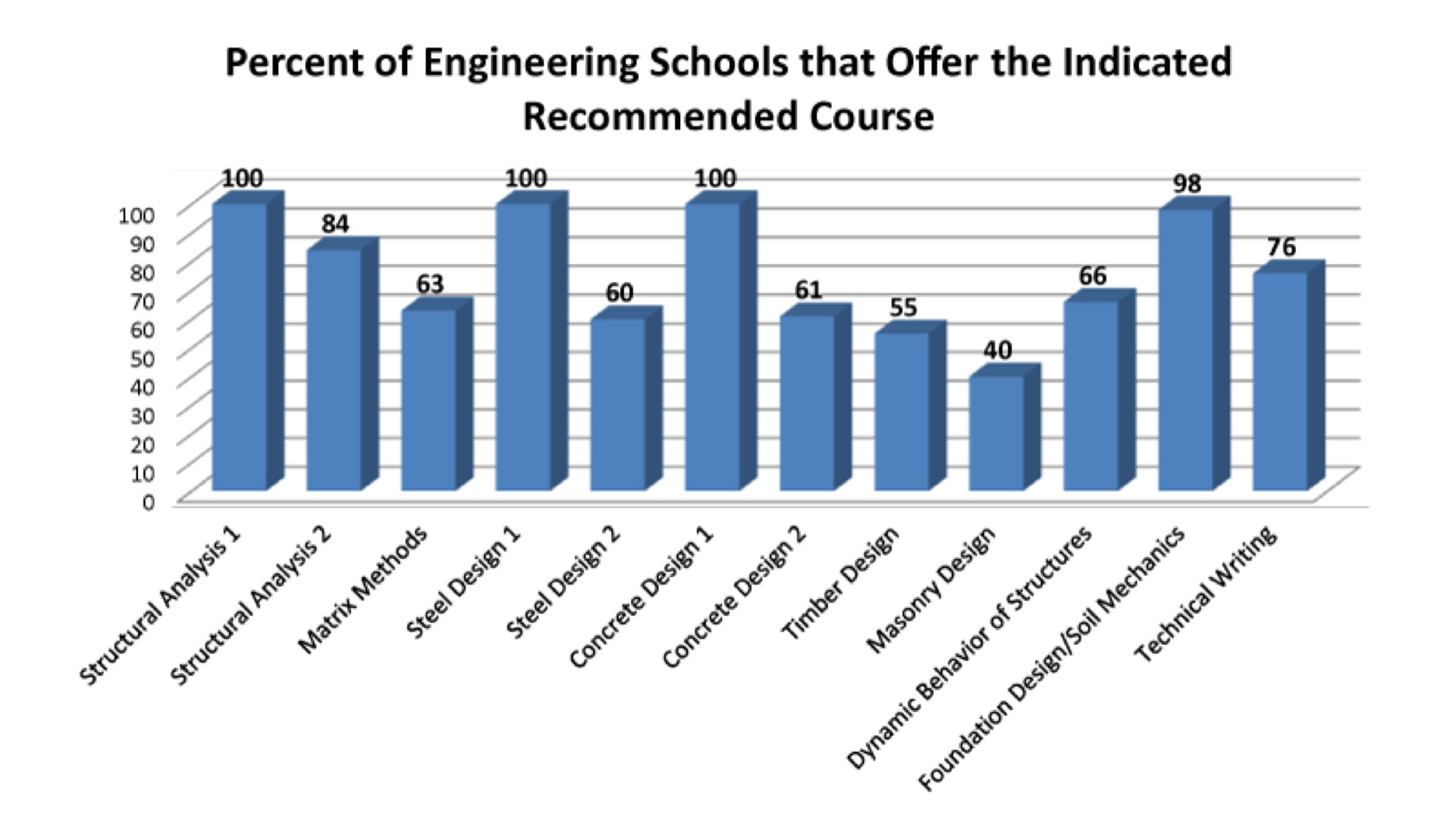
Figure 2. Pie chart graph from NCSEA article on the Structural Engineering Curriculum Survey (Figure 4 from the article).
For this reason, the education of future engineers should be something that catches the attention of the entire masonry industry. Right now, university education in the United States is not making the majority of future structural engineers comfortable and familiar with the use of masonry. The September 2016 Issue of Structure Magazine (a publication of the National Council of Structural Engineers Associations, NCSEA) included an article by Brent Perkins, P.E., S.E. entitled 2016 NCSEA Structural Engineering Curriculum Survey, which can be found here: www.structuremag.org/?p=10449
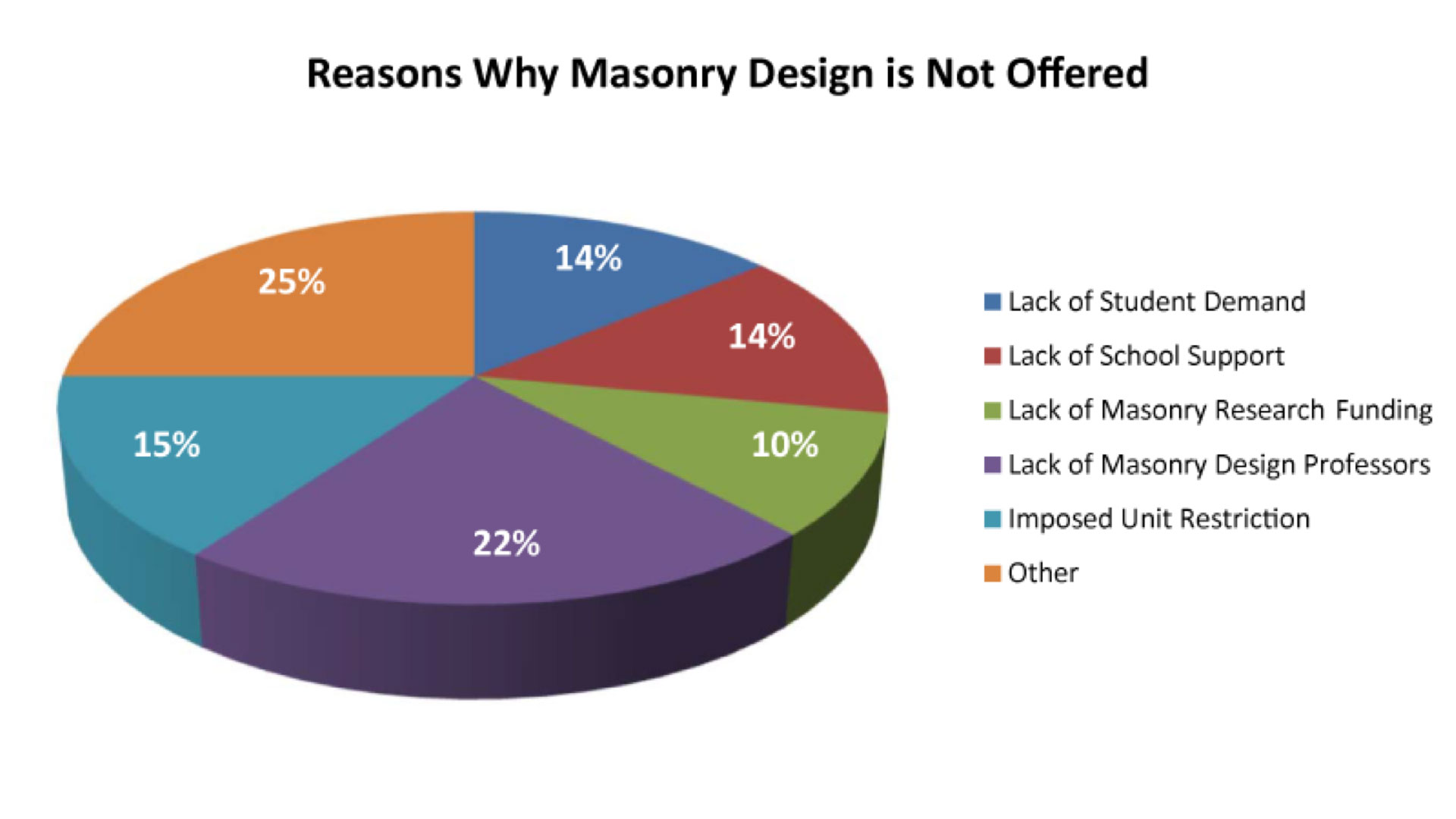
Figure 3. Current Masonry Design engineering students simulating arching action with toy blocks in class.
The article indicates that Masonry Design is offered less frequently than any other core class recommended by the NCSEA, with only 40% of the schools surveyed even offering a Masonry Design course, and this is not a brand-new development. The article states, "Past survey results have indicated that Timber and Masonry Design courses are not taught at nearly the same frequency as Steel and Concrete Design courses." The survey included an additional question regarding the reasons for masonry courses not being offered at universities. Some of these obstacles can be overcome with the cooperation of the masonry industry, including individual masons. Programs like the Educators' Workshops hosted by The Masonry Society are already helping train qualified masonry instructors for engineering and architecture schools.
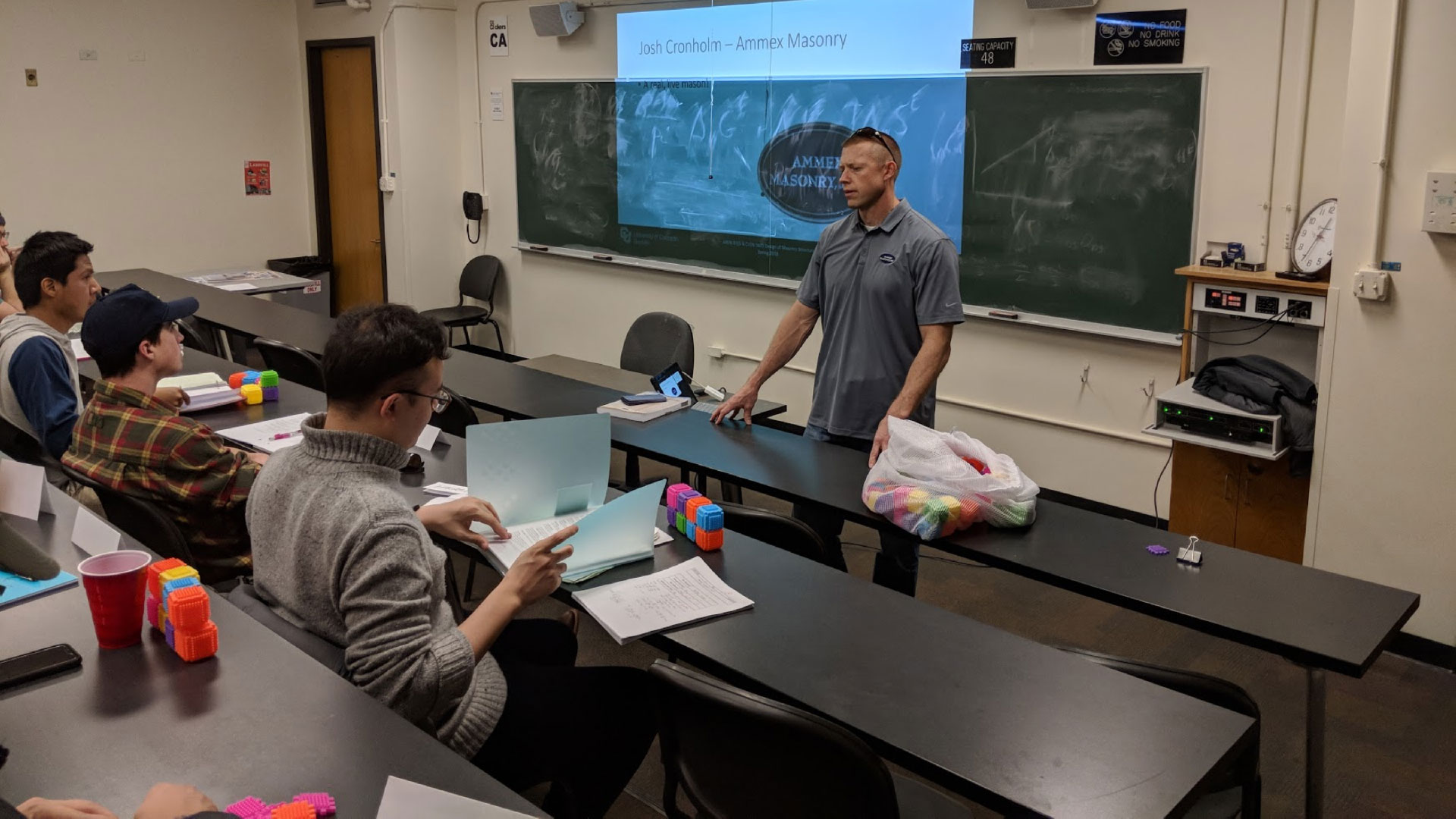
Figure 4. Josh Cronholm of Ammex Masonry (MCAA Member) speaking to university students about rebar cell crowding and demonstrating masons' tools in class.
As I have been teaching a university-level Masonry Design course this semester, the value and importance of masonry education has become more apparent than ever. I attempt to ensure that students have hands-on demonstrations in the classroom and practical discussions about how to design masonry in a constructible manner. This semester also includes plant tours at a brick and block plant. Perhaps most importantly for the MCAA, my course also includes site visits to masonry projects and classroom instruction from masons, such as Josh Cronholm of Ammex Masonry.
I would encourage masons to reach out to your local universities and inquire about Masonry Design courses. If your local school has a course, offer to arrange a site visit or guest speaker to discuss masonry construction materials and practical advice. If your local university does not have a Masonry Design course, talk with the school about helping to establish one. Structural engineers who are comfortable with masonry will design more masonry structures!