A Prescription For Masonry
Words: Isa Stein
Sponsored By

There’s a way for masonry professionals to learn exactly how to best care for their masonry investment.
Most materials of value come with a set of instructions on how to care for them. For everything from clothing and appliances to jewelry and vehicles, these goods almost always come packaged with best practices on how to maximize their service life and investment by the consumer.
What about when it comes to pallets full of stone, brick, CMU, pavers or precast concrete? For such a big-ticket item on a new construction or restoration job, mass units of masonry unfortunately do not always come with a prescription for care.
This gap is what prompted PROSOCO to launch its Pallet Tag Program, a free service primarily utilized by brick, block, stone or other masonry producers but available to all customers, including mason contractors, distributors, building owners and others. In a nutshell, Jake Boyer, leader of PROSOCO’s Clean and Protect Group, says the Pallet Tag is that prescription for care that’s largely been missing from commercially marketed masonry.
“It gives people the prescription right there on the package on how to treat it and care for it,” Boyer said. “You just received this material, here’s how you take care of it. It’s an easy button.”
How Does It Work?
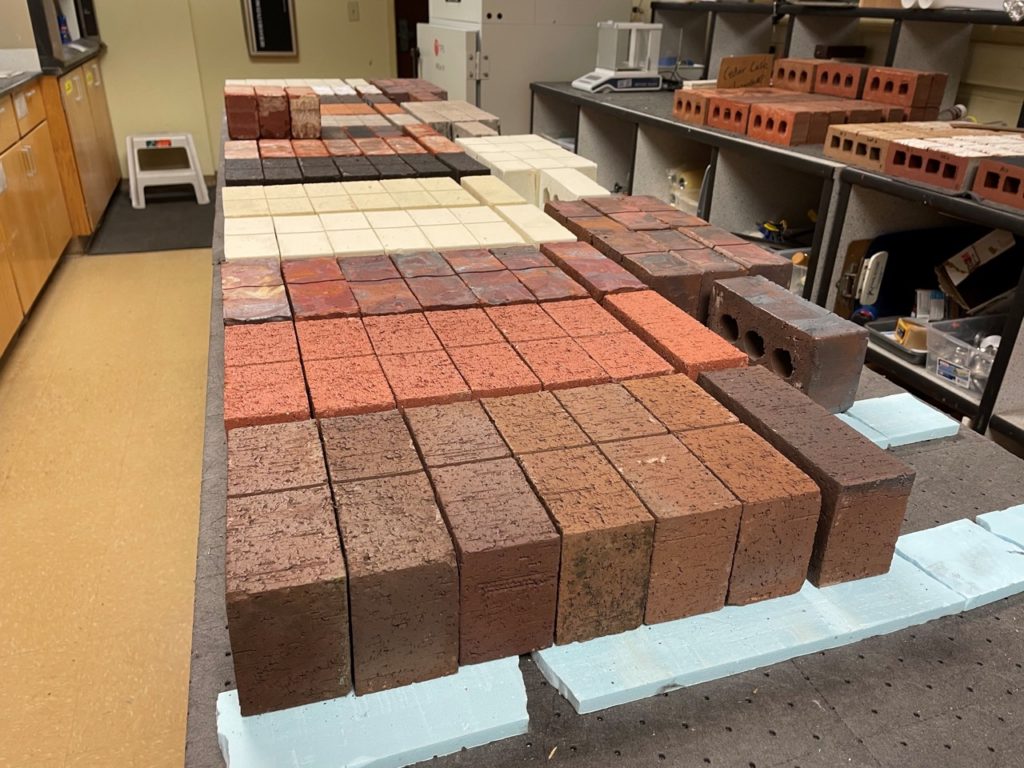
It’s easy to do. Simply fill in a submittal form, compile your samples, ship them to AMT Labs for testing, and then you will receive a full report specific to your masonry with information on the best products to clean it, protect it, and extend its service life and durability. From there, PROSOCO’s marketing team will work with you to design and develop a customized tag to attach to each pallet with a summary of directions and references to the appropriate products, dilutions, and application methods specific to your unique substrate.
Those participating in the Pallet Tag can expect their customized results anywhere from a couple weeks to a couple months, depending on how many samples they are submitting. “That’s all communicated to the user by Lucas Comadoll, Project Testing Technician at AMT Labs.”

The program is also not just for masonry. “We can test on fiber cement panels, other types of cladding, aluminum metals and more,” Boyer said. “The program started with masonry but it’s evolved from there as building cladding choices have evolved over the years.”
The need for this program stems from the enormous variety of commercially available masonry and other cladding types, along with variables such as regional conditions, stain types and even weather patterns.
“It’s a way for people to say, ‘Hey I’m on this job, here’s the situation, here’s the conditions and substrate, tell me how to do it.’ We write the prescriptions specific to that instance, instead of a generic one-size-fits-all approach.”
Boyer emphasizes that the only cost to the user is the cost to ship samples to AMT Labs.
“It’s a multi-million dollar investment for us in terms of hours and testing, that we don’t charge anything for,” he said. “It’s a service that we’ll gladly bear the cost for if that means simplifying the job for our customers. Our intent is to make sure the industry is continuing to move in the right direction and we’re not left cleaning up after improper applications and products, damaging the reputation of the producers, the contractors, the architects and others involved in the projects and further delaying project schedules.”
Find participating manufacturers and pallet tag reports.
Learn more and get started with PROSOCO’s Pallet Tag Program today.