Warming Up with Outdoor Fireplaces
Words: Joe Raboine
Words and Photos: Joe Raboine, Director of Residential Hardscapes, Belgard
It’s no surprise that fire features – like fire pits, fireplaces, and fire tables – are among the most popular outdoor living accessories. Fire has long offered us a sense of comfort and peace, from the earliest days of humanity to our modern-day outdoor living spaces. Sitting around a crackling fire is proven to be relaxing, with studies showing it can reduce anxiety and stress.
As temperatures cool down, your customers will be taking full advantage of their fire features so they can maximize their time outdoors. Fire features serve as a source of both heat and light, which is beneficial as daylight hours decrease and temperatures drop. They also are an amazing centerpiece for a beautiful outdoor room. All these factors make them an effortless selling point for your client base.
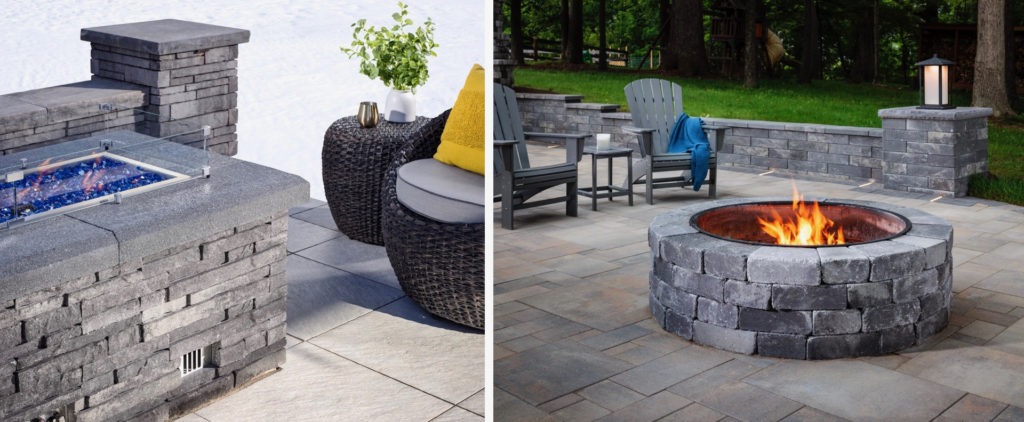
With changes in products, styles and trends, fire pits and features no longer have a standard look or shape. You can elevate your clients’ backyards using modular design styles and geometric shapes and patterns, which align well with the modern design that’s popular today.
Here are a few tips and considerations to remember as clients approach you to create new fire features this season.
Eye for Design
While round fire pits are still a common and popular fixture, we have more products and design tools available today to construct more contemporary, elaborate fire features, as well as sell additional elements for added flair.
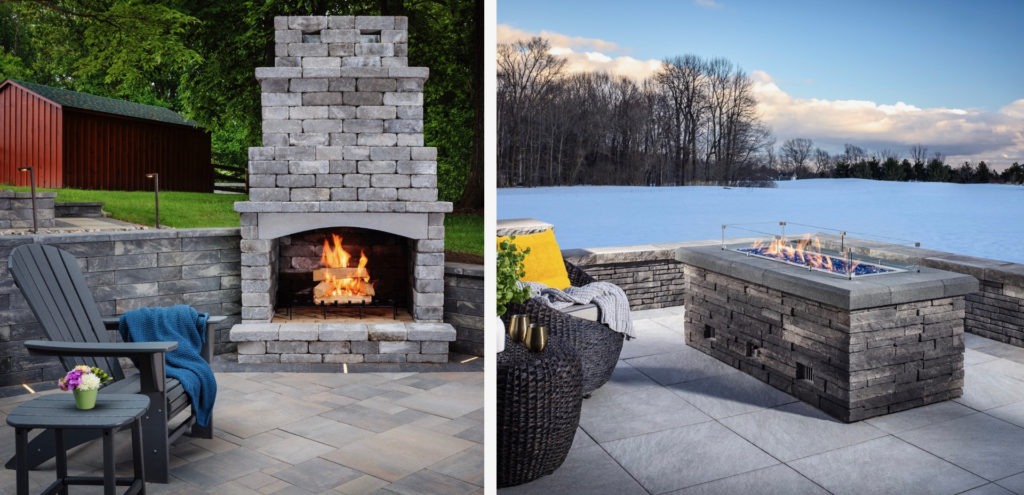
Linear, rectangular fireplaces and fire tables are becoming increasingly popular and give an outdoor space a more unique edge. This more modern take on the fire pit can be applied in casual backyard settings or more formal gathering areas. You also can add extra fire (or fire and water) elements like fire bowls for a more dramatic effect. Fire bowls also are a great option when working with microspaces, in which clients don’t have ample yard space for the full fire pit with supplemental seating.
Mix It Up with Unique Materials
As demonstrated by the array of designs we can now create, you also can incorporate different materials into fire features to make them as unique as your client. Pavers are always a top choice as your base material, given their durability and ability to handle high temperatures, but consider additional elements or textures to make your client’s outdoor space truly stunning.
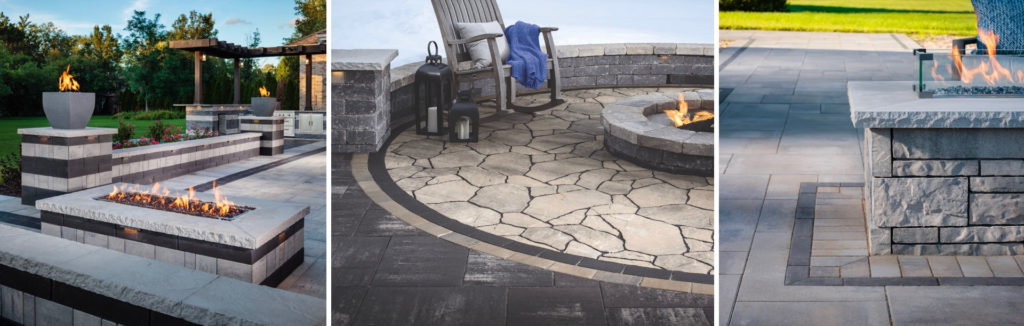
There are many paver styles available today that have a natural stone finish and texture that offer an organic look and feel. Paired with smoother, linear pavers, this delivers a beautiful level of contrast. You also can mix and match complementing or contrasting color palettes for more dimension – such as deep charcoal with lighter gray tones.
You also can incorporate natural stone boulders for more biophilic design styles. Paired with earth-tone pavers with rougher edges and textures, this offers a very natural feel.
Winter Maintenance
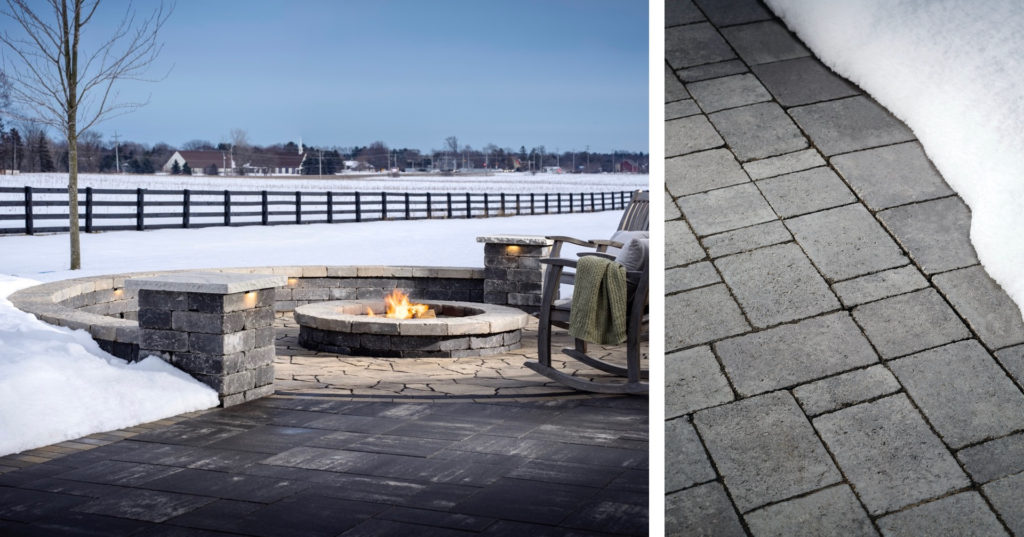
In addition to offering guidance on design, make sure to share maintenance tips so clients can keep their fire features looking and working great year-round.
When fire pits aren’t in use, it’s best practice to apply a cover, as this will help deter snow and ice buildup. This is especially important if the fireplace or fire pit uses gas or ceramic logs. Proper installation and maintenance ensure their fire feature will stay beautiful and functional every season.