The Wren Building at the College of William & Mary
Words: Matt Webster, Executive Director at Grainger Department of Architectural Preservation and Research
Photos: Matt Filstead
The Wren Building at the College of William & Mary is the oldest academic building still in use in the United States. George Washington was chancellor of the college. The building is currently used for classes and special events and is also open to visitors for tours. James Monroe, Thomas Jefferson, John Tyler, and John Marshall were all educated in the building during their respective times.
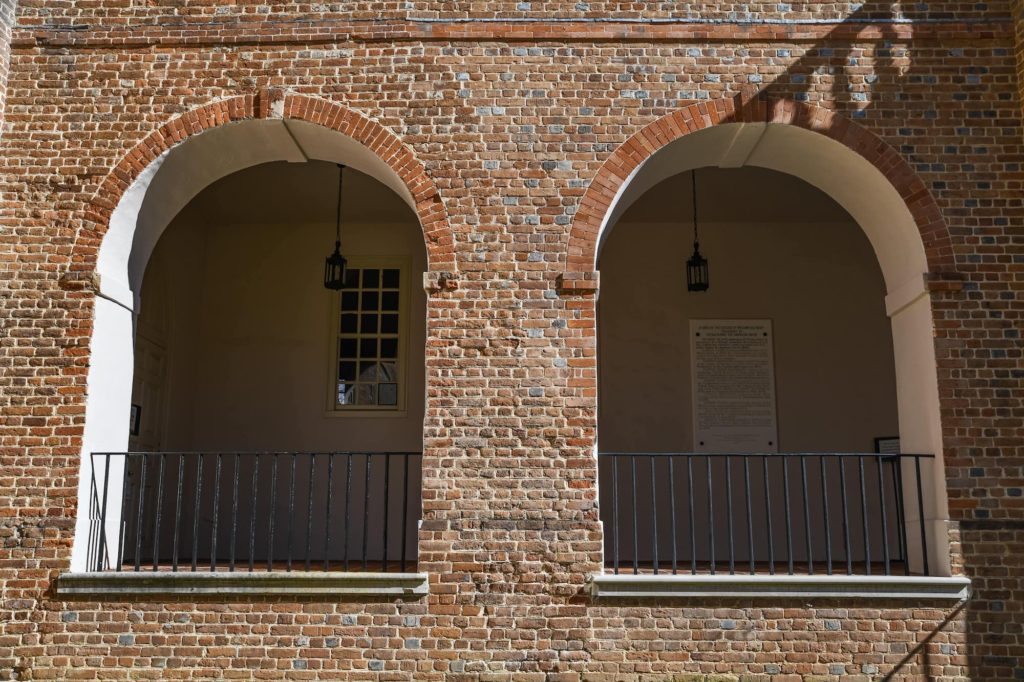
From a masonry perspective, it is an incredible structure. It is a Flemish bond with glazed headers, rubbed work, rubbed and gauged arches, struck joints, etc. Personally, I am a masonry person, and for me, it is the stories that the masonry tells. It would likely have taken over 1.2 million bricks to construct throughout. The bricks were produced by hand, with each one being touched an average of nine times. The impact of environmental conditions during production, production methods, and even the workers' fingerprints can still be seen on the bricks today. There are also the marks left by construction, including the tooling marks left on the joints and the line pin slots. It is an amazing structure overall and carries an abundance of history with it.
Original Design And Construction
The designer is unknown due to the age and history of the building. A single reference in a letter from a mathematics professor in 1724 says the building was “modeled by Sir Christopher Wren.” No other documents or references have linked Wren to the building throughout the time. The true name of the building is the College Building, located at the College of William & Mary in Williamsburg, Virginia.
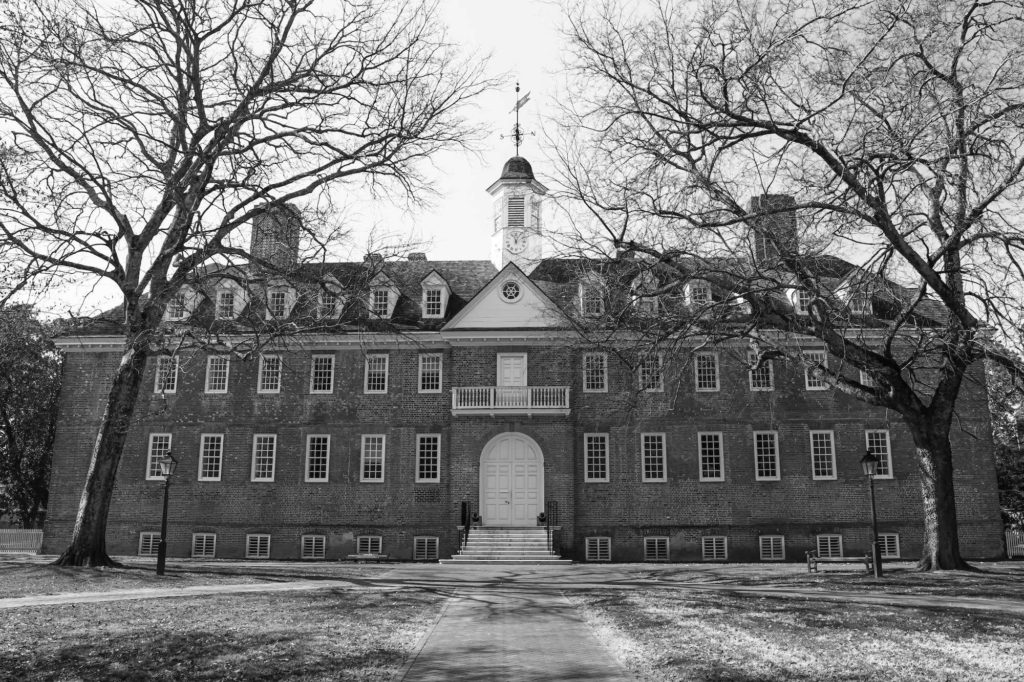
Construction started on August 8, 1695, by builder Thomas Hadley. By 1697 funding was lacking, and construction stopped, leaving the building in an L shape instead of the intended quadrangle layout. The building was in use by 1700. Shortly after this initial build, a fire had broken out, and thus, began the reconstruction efforts throughout history.
The earliest building housed the president, teachers and students, as well as the Indian School until 1723. Classes were held inside the building, and it also served as the meeting place for the Virginia General Assembly from 1700 to 1704, while the Capitol was being built. When the Capitol burned in 1747, they would again meet here until the new Capitol was completed in 1754. The chapel was used for services, and the crypt has several notable burials, including Lord Botetourt and Peyton Randolph. During the Revolution, after the battle of Yorktown, it was used as a French hospital. During the Civil War, it served as housing and a hospital for the Confederate army.
Reconstruction
The building burned three times, 1705, 1859, and 1862. While the masonry survived, the interiors had to be redone quite a bit. A fire gutted the structure in 1705, and then was then reconstructed starting in 1709 by contractor John Tullitt. It was still in an L shape and in use by 1716, with construction officially declared complete in 1723. The west wing, which includes the chapel and crypt, was constructed by contractor Henry Cary starting in 1729. This work was completed by June of 1732, when the first service was held in the chapel. This work turned the structure into a unique U shape. In 1772 Governor Dunmore requested that Thomas Jefferson create designs to finish the quadrangle plan and work began shortly after in 1774. The work was never completed due to the Revolution.
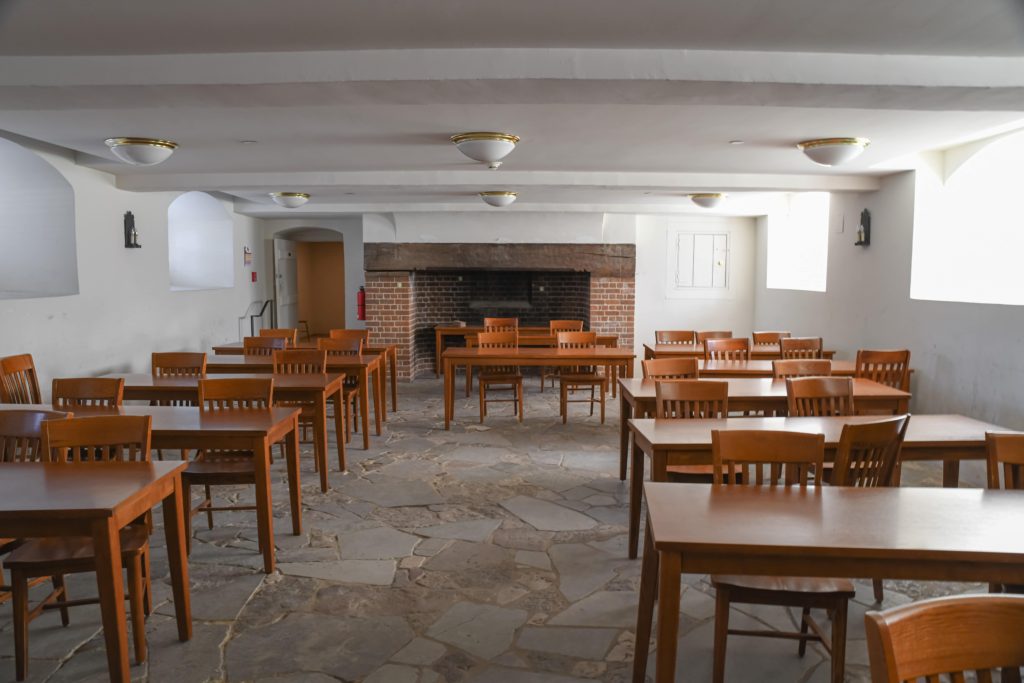
The fire of 1859 led to some big changes. When the building was redone, it included two Italianate towers on either side of the main door. The building was burned by Union troops in 1862. Once again reconstructed in the 1930s, John D. Rockefeller Jr. restored the building to its 1932 appearance as part of the Colonial Williamsburg restoration.
Gallery of Photos