Selecting and Specifying Personal Protective Equipment
Words and Photos: Malta Dynamics
Falls are among the leading causes of workplace injury and death each year. With more than 7,700 cases in 2018 alone, OSHA consistently cites more companies for fall protection violations than any other issue. So, how can you keep your team safe and prevent expensive fines? It all starts with a plan.
Before every job, before work begins, and before your workers strap on harnesses or personal protective equipment, you need to develop a fall protection plan. In the world of Masonry, you can get a rhythm for what fall hazards your workers are likely to encounter because many of the projects are similar, but with any of these jobs, you must first start with figuring out what work is required and the hazards your team might face.
Performing a hazard analysis enables you to make a thorough and honest assessment of the fall hazards present in the current workspace. Armed with the knowledge of where your workers are most likely to encounter a fall, you can engineer solutions to mitigate the risks and train and equip your workers with PPE that will help to avoid serious incidents and injuries.
The next step in selecting and specifying PPE is to get a clear understanding of what’s required by the general contracting safety team, to make sure that your own safety policies and theirs are aligned and meet all the minimum OSHA requirements. Once you determine the standards that apply to your jobsite, you’ll next figure out who your authorized persons are going to be on the project. These safety persons will need to know what equipment should be provided to the workers in the form of personal protective equipment and the personal fall arrest system.
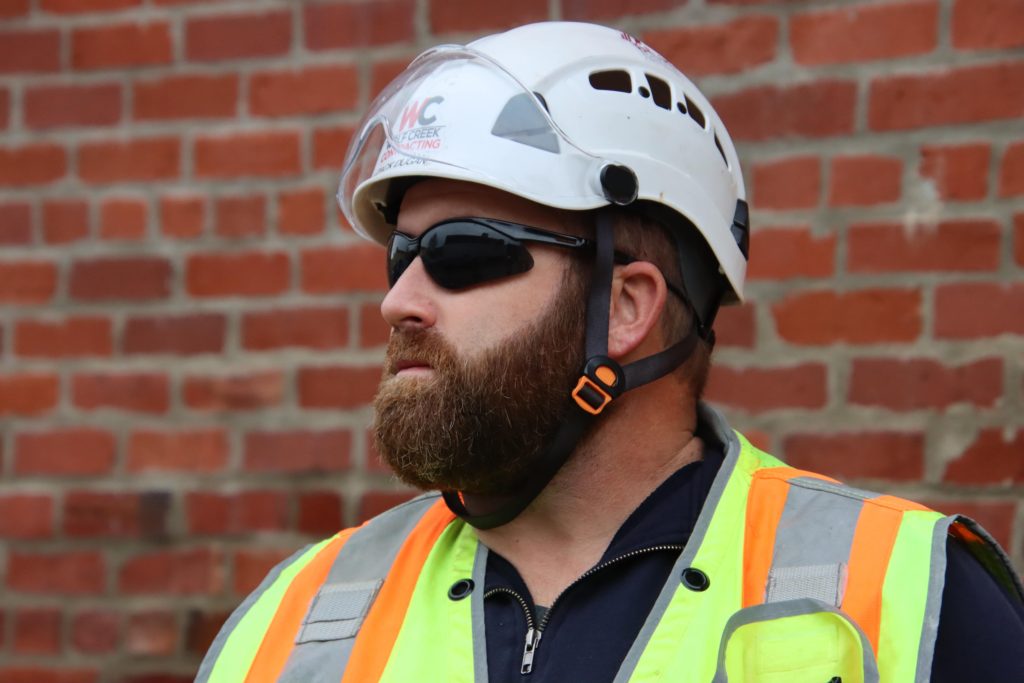
Let’s put this advice into action with an example. You’ve got a project with five workers on the crew doing overhand brick laying. These employees are going to be in harnesses for 8 hours a day, tied off at D-Ring level to a mobile elevated work platform via a horizontal lifeline system. What we know is that virtually every jobsite requires head, foot, and eye protection; the masonry industry has made this a pretty automatic requirement. So, figure out if the crew will need Type 1 or Type 2 head protection; is a safety helmet required? Safety helmets come with a chin strap, and some have built-in visors for eye protection, which eliminates the possibility of dropping safety glasses or letting the hard hat fall off. Determine what is right for the job and the workers who must wear the protection equipment. We don’t always think of fall protection and PPE in the same category, but it’s enlightening that in the masonry industry, we are heading in a way with a common understanding to incorporate both. You’ll want to select a comfortable harness for all-day wear. Let your crew make some suggestions on what they need, like lumbar support, lightweight, with padding? Letting your employees have a say in their protective outfit will allow them to take ownership in their safety and encourage them to wear it.
Safety conscious companies are successful companies. At the end of the day, there’s a job to be done, and completing the project with no injuries should always be at the top of your priority list. Before you take on work, you’ll want to go ahead and invest in safety equipment early so you can plan for the safety spend in your project budget. There’s nothing worse than getting to the jobsite to find you’ll need to purchase more safety equipment than you planned for and realizing you’ve underquoted the project. Get ahead of the spending and invest in quality fall protection and personal protective equipment that will keep your crew safe from site to site. Not only will your return on investment be rewarding, but you’ll also have peace of mind knowing that your employees are properly fitted, trained, and equipped with everything they need to stay safe on the job.