Iowa’s Professional Development In Masonry Give Teachers The Opportunity To Learn Masonry Skills
Words: Stephanie Heckroth
Words: Stephanie Heckroth, Seedorff Masonry, Inc.
Photos: Seedorff Masonry, Inc. and the Masonry Institute of Iowa
We need more bricklayers. We all know it. But how do we build this next generation of bricklayers if they’ve never heard of masonry? High school industrial tech classes have made notable progress with the addition of new programs and trades to their construction curriculum. However, masonry is commonly left out of the syllabus. Why? Masonry is a tough trade to learn, and not many teachers feel comfortable in their knowledge of the subject, let alone have the tools, material, and skills necessary to conduct a hands-on unit.
A Collaborative Solution
The Masonry Institute of Iowa (MII) recognized this challenge and started working toward a solution. Director, Jenny Irlmeier, sought out a partnership with the Bricklayers and Allied Craftworkers Local 3 (Marshalltown, IA) and company member, Seedorff Masonry, Inc. to create a program referred to as “Train the Trainer.” The group set out to train the people who will help develop the next generation of skilled craftsmen. Their specific goal: Train high school industrial tech teachers to create enthusiasm, bring real-life experience into the classroom, and teach masonry to their students.
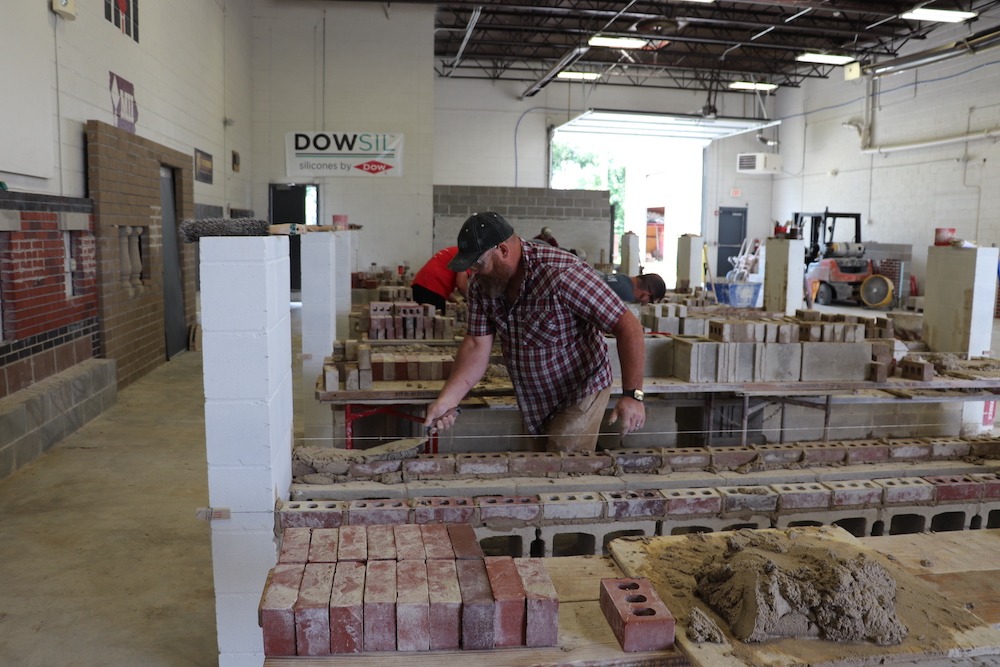
In order to provide the most value to teachers, the 15-hour Professional Development in Masonry course was registered through the local Area Education Agency to allow for professional development credit (a rare offering specific to industrial tech). The two-day class includes a mix of classroom and hands-on lab learning that covers the basics of masonry, including terminology, tools, assemblies, details, and hands-on instruction with journeyman bricklayers. Once they’ve covered the basics, teachers have the opportunity to take what they’ve learned to design, build, and evaluate their own project (a great idea to bring back to the classroom as well!).
A Level 2 session was added to take what the teachers learned in Level 1 a step further. During this 15-hour course, teachers were introduced to more advanced skills, including blocklaying, tuckpointing, and additional masonry mechanics.
To foster collaboration and connection, a social at the end of the first day allowed for plenty of time for idea sharing and conversations about successes and challenges. Participants also receive a list of contact information for all teachers in their session that serves as a networking resource moving forward.
Impactful Results
Train the Trainer began in the summer of 2019, with 34 teachers participating in three sessions. Feedback from participants was overwhelmingly positive and several teachers encouraged colleagues or nearby schools to participate. Interest also took shape around repeating the course or taking their skills up a level with advanced (level 2) instruction. Momentum was apparent, and the opportunities to grow the program were boundless.
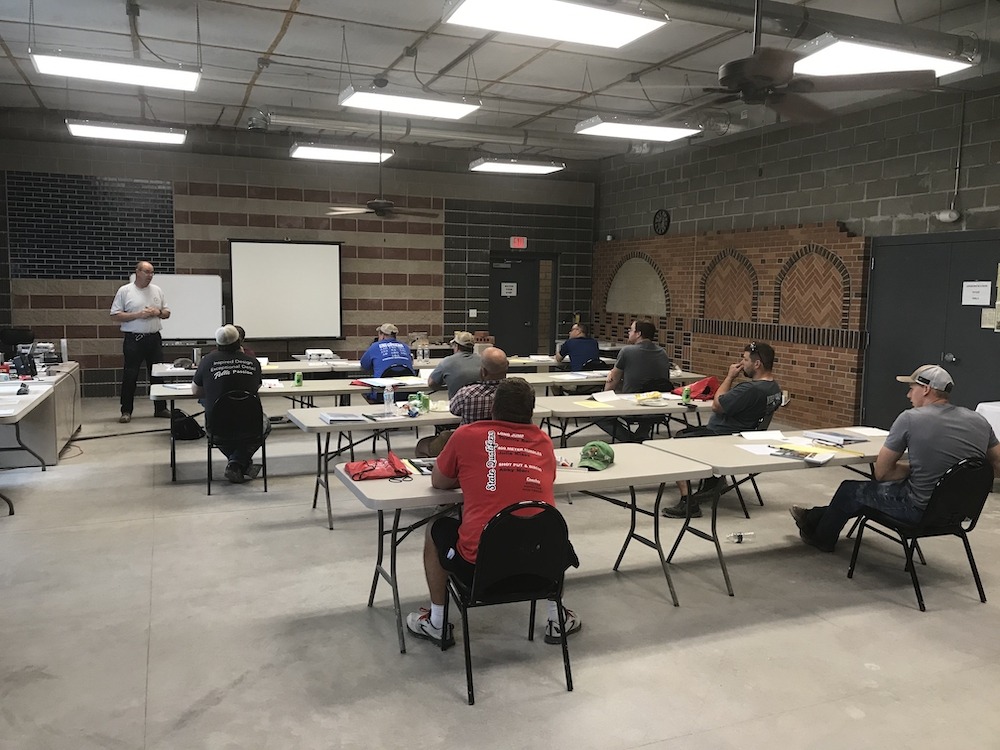
Though the summer of 2020 halted the best-laid plans for three more sessions due to COVID-19, the team forged ahead. From June through August 2021, MII hosted five separate classes in two different locations across the state. With four “level 1” classes and one “level 2/advanced” class, 43 teachers from 34school districts attended – including 9 who took both a level 1 AND level 2 class.
Between the two summers, more than 75 teachers have participated in Professional Development in Masonry – which is nearly 30% of the industrial tech teachers in the state!
"By enrolling in the professional development class provided by MII, I was able to gain skills and content that was applicable to both my program and the workforce. By being provided with curriculum resources and a way to access supplies, it makes including masonry in my construction class affordable and relevant. Teaching masonry similar to how we were taught in class will make the lesson hands on and fun while also letting students get a glimpse of what pursuing a career in masonry might look like." – Shane Peterson, West Lyon Community School District
“Before taking the course, I hadn’t really thought about doing a masonry unit with my students. But after learning more about masonry as a whole and receiving all the materials to run a unit, I am super excited to share the knowledge I gained with my students!” – Ashley Mattke, New Hampton Community Schools
It Doesn’t End There
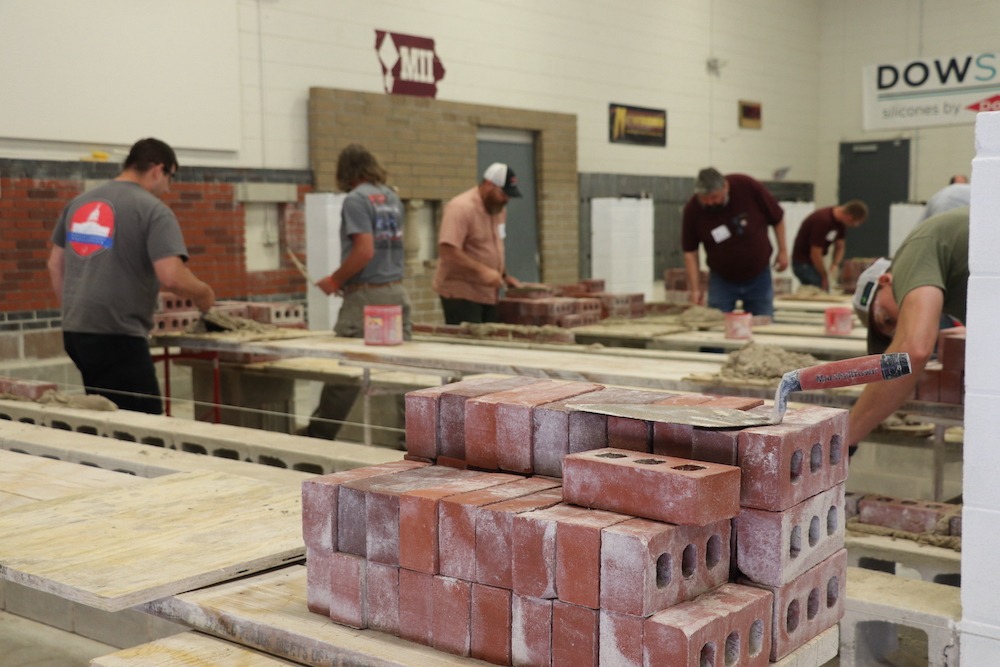
Once teachers complete the class, MII equips them to hit the ground running. In addition to the 15 hours of learning, participants are equipped with a digital library of classroom resources, including recorded PowerPoints, videos, quizzes, classroom setup ideas, toolkit rental, and more. These ready-to-use materials provide quick and convenient solutions in the classroom and act as a refresher for teachers as they implement a masonry unit at their school. And if they happen to need additional assistance during the school year, teachers are also encouraged to reach out to the contacts they met from MII, BAC, and SMI.
MII, BAC Local 3, and SMI are already starting to look ahead to next summer and continue to engage with past participants to ensure the knowledge gained is making it to the classroom. It’s programs like these that are starting to remove barriers for teachers to incorporate masonry in the classroom, create excitement around the opportunities available to students, and build the next generation of bricklayers.
If you’re interested in learning more, reach out to Jenny Irlmeier at jirlmeier@masonryinstituteofiowa.org.