A Look At Recycled Brick
Words: Alan Herrera
Words: Alan Herrera
Photos: Brent Schmitt
Chicago Common bricks were used to build up most of the Windy City. They are the rough bricks on buildings’ sides and backs, made from the river’s clay, and when fired they transform into a beautiful variation of yellows, pinks, and reds. But most importantly, they age impressively and beautifully. Brent Schmitt, Architectural Sales and Executive Officer of Bricks Inc., has helped fulfill two clients’ visions of constructing with recycled Chicago Commons.
The first project, 418 Kenilworth Ave in Elmhurst, IL, the customer expressed interest in needing to know where the reclaimed brick came from. When a building was ripe for demolition, Schmitt notified the client, who traveled to the site before its demo. The building itself had a spray-painted mural on one floor, and all other brick was generally well-worn, but the client was thrilled with the imperfections of the brick. He gave the go-ahead for the final product to be used on the residence.
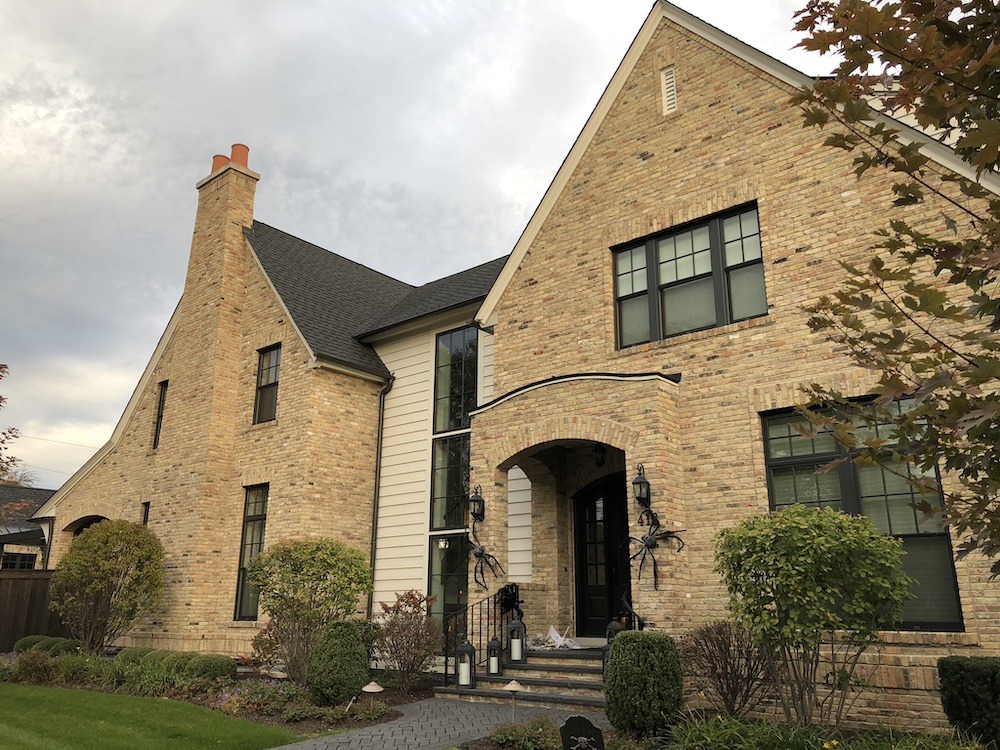
The second project, 2110 N Damen in Chicago, IL, the client was a bit more particular. Builder Matt Wilke of LG Development knew exactly what he wanted: to mimic the old aesthetic of historic Chicago factories. Wilke was more hands-on than usual clients. He examined multiple samples of Chicago Commons, but only finalized selections with the help of his wife.
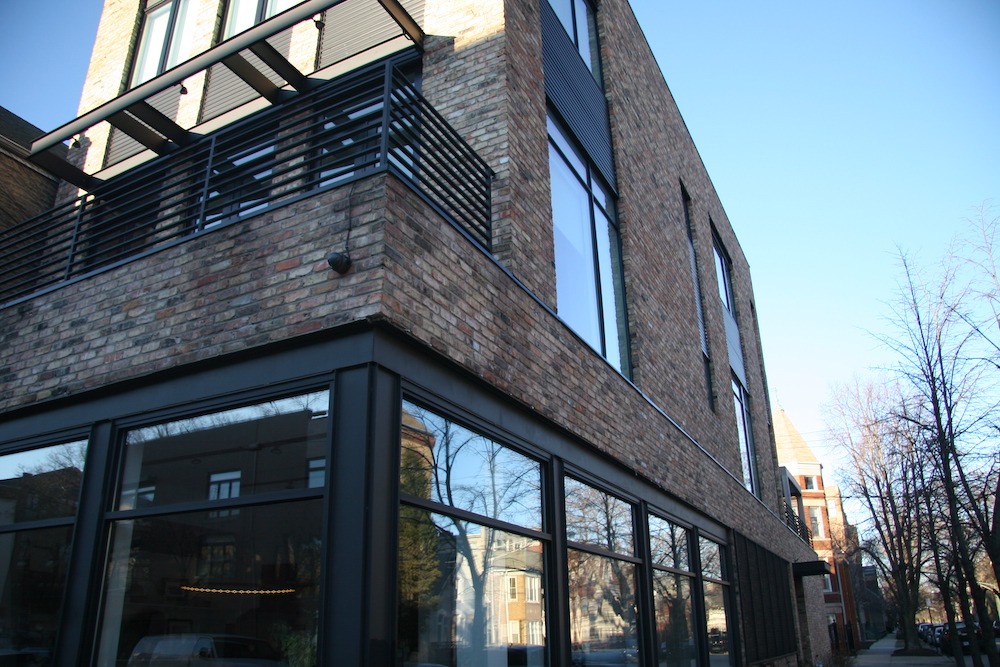
The chosen bricks were a blend of colors to match the authentic historic look they desired. They were specific about wanting a “full range” which includes all the available colors of Chicago Commons, intermixed, like the backs and sides of buildings from the 19th century. Wilke and his wife were even drawn to the dirtiest, blackest bricks of the batch!
Extracting and preserving brick intended for recycling is part of a detailed process. When a building is scheduled for demolition, the contractors obtain all proper permits. Demolition follows. The contractors then separate materials that still hold value, like brick and steel. A stacking crew then sorts each material by color, removes debris, and stacks atop wooden pallets. The pallets are wrapped in cardboard and metal bands. Bricks Inc. boom trucks visit the site and pick up the pallets. Bricks Inc. staff then loads materials and other vehicles bound for their new home.
If a client is interested in thin brick, the contractors perform an extra step in the extraction and preservation process. The bricks’ two stretcher faces are cut off in the warehouse, and the unused interior is pulverized and made available as a separate material for interested parties.
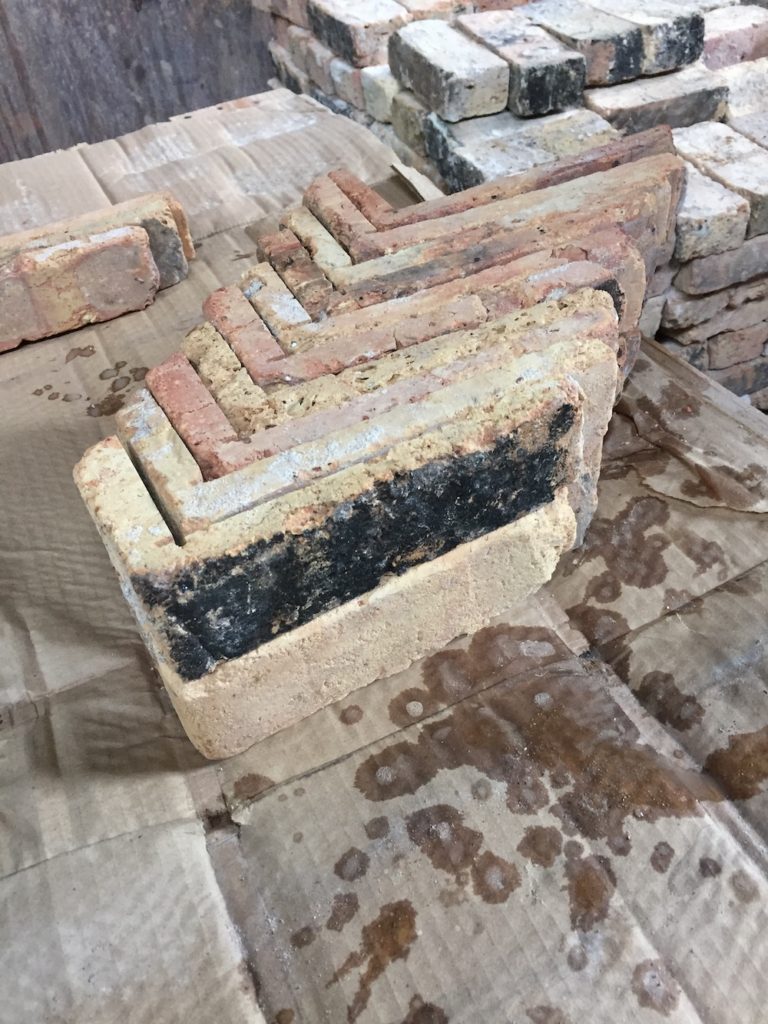
“We don’t clean the brick,” Schmitt states when asked about power washing. “The sootiest and dirtiest bricks are frequently sought out specifically for their dirt. However, a customer can always choose the other side of the brick. One side of the brick has spent its life facing out towards the street, while the other side of the brick has faced inward towards the interior of the building or wall system. The inward-facing side is generally much cleaner and truer to the original brick color. Customers can also choose to specify the brick color (i.e. Sand Buff, Dark Pink, Light Pink, etc.) or opt for the full range - which includes the whole kitchen sink of Chicago brick colors!”
The reclaiming process does not take too long but is known to vary. Typically, if the permit acquisition goes smoothly, it takes up to 2 weeks to palletize the brick and move it to warehouses or client sites. General safety precautions of reclaiming and moving the brick are typical to the industry: wear PPE (personal protective equipment), and “as a general rule of thumb, don’t lick any sooty bricks,” laughs Schmitt.
The brick matching process is also detailed and tailored to meet a customer’s specific needs. “We start by asking for a rough quantity of brick they’ll need for the project,” says Schmitt. The customer will often have an actual brick as an example of a photo. It’s difficult to get exact matches, but Schmitt’s team works hard to narrow down all available options. Smaller projects make brick matching easier, as they will often have bricks in stock that will match size and appearance. If there are no bricks that match in stock, the sales team will create sample boards of bricks of similar size, texture, color, coatings, wear, etc.
“Larger projects can be a little trickier,” admits Schmitt, “Especially if the quantity needed exceeds the amount available from a particular batch of brick.” Bricks are manufactured in batches, and each batch varies in appearance due to firing and other fabrication intricacies. With reclaimed brick, oftentimes it is a collection of many separate batches all in one, which makes matching bricks difficult. With multiple batches sitting together in one building, the bricks’ appearance shifts and changes with time, weather, and more, all at different intervals and stages.