Innovative Find From World of Concrete 2020
Words: MASONRY Magazine
Photos: Quick Headers
World of Concrete showcases the new up and coming products that will be available to the construction industry. This year there were many new and innovative products however there was one, in particular, that could be a game-changer for the masonry industry. Quick Headers, debuting adjacent to the MCAA booth at WOC, has a patented, removable masonry shoring system that generated non-stop attention at the four-day show. Originated for the residential market in Australia, Scot and Judy Kelly established the first U.S.-based rental center and proof source for the product in Salt Lake City, Utah, in 2015.
Quick Headers were modified and patented in the US to meet the needs of more diverse and technical-commercial projects. Designed by masons, for masons, Quick Headers will significantly reduce shoring costs, increase efficiency and safety on a jobsite, reduce the impact on the environment and eliminate the need for wood bucks for windows and doorways.
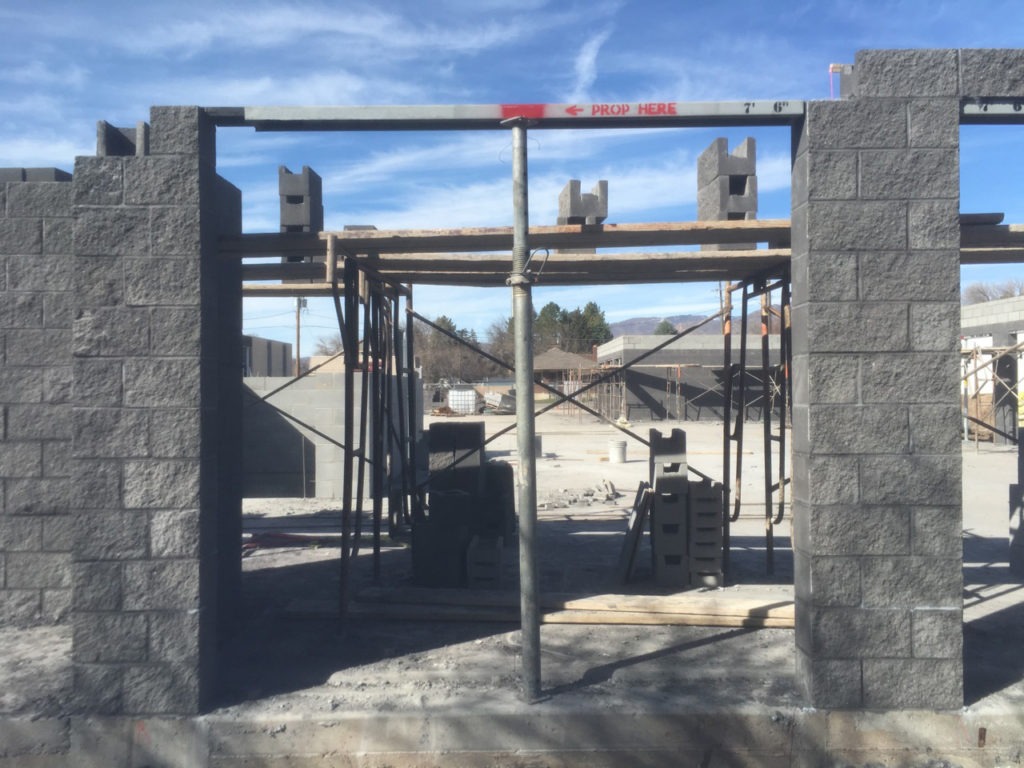
“Depending on the size of the opening it can take various people a total of 30 minutes to two hours to measure, plan, purchase lumber, build and set a wood buck doing it the traditional way. Using Quick Headers, it takes a matter of minutes or less to place it and continue setting block,” states Judy Kelly of Quick Headers, LLC. “It’s particularly costly when skilled masons have to stop setting block, get down off the scaffolding to build and install a wood buck,” she adds.
Traditionally, masons use wood lumber to “buck out” an opening when setting CMU block. Once the mason has reached the height of the opening and is ready to “cross-over” the top, the appropriate size of Quick Header, with its adjustable trays, is laid over the opening and the masons continue to set block on top of the Quick Headers without delay.

Once the concrete has cured, ranging anywhere from 10 days to 3 weeks depending on the size of the opening, the tray is tapped back and the Quick Header drops out, ready for use in the next opening. “Masons can remove a Quick Header in under a minute once the concrete has cured,” says Scot Kelly, “and removing a wood buck is as time-consuming as installing them, and then there is the waste and the block repair once a wood buck is taken out.”
The easy to use Quick Headers is ideal for Rental Operators to have in their inventory to offer masons and General Contractors alike and is the direction Quick Headers is promoting. Quick Headers have a life expectancy of approximately 20 years, can save masons almost half on their storing costs, provides a large return of investment for Rental Operators, and can help keep the journeyman and laborers safe on the jobsite are just a few of the benefits of using this product. If you’re in the market for new labor-saving products for your company, or you are a Masonry Supply/Rental Operator, be sure to check out QuickHeaders.com and see it this product is a good fit for your company.