December 2007: Government Affairs
Words: Dan Kamys
Making a Real Difference
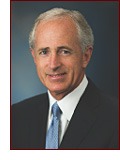 Bob Corker
Senator (R-Tenn.)
Bob Corker
Senator (R-Tenn.)
It's been just over a year since I was elected to serve the state of Tennessee in the United States Senate. After 11 months in office, I can sincerely say it is a bigger honor now than when I was elected. Every day, I see how U.S. policy not only affects my state and the country, but also the entire world.
One of the most important lessons we learned was that in order to make a difference, we had to organize our office and our staff with a commitment to digging into legislation, rathern just running from meeting to meeting, superficially touching issues. We began looking ahead at the major issues coming down the pike. We brought in the leading minds on those issues, so our decisions would be thoughtful and informed, and we could help create legislation that would actually work on the ground.
I've found that I can make a real difference in the Senate by asking the kind of questions that you ask each day — questions that get to the heart of a matter and focus on the real issues at hand. Several months ago, during a luncheon with other Senate colleagues, I argued passionately about health care. As I walked out, one of my fellow senators said, "Corker, I wish you would quit tormenting us with logic." And I thought, "That is exactly what I came here to do."
This first year in office has made it clear to me that my role will not be that of a prolific legislator. You won't see a "Corker Bill" presented on the floor every week, because that's not what I came to Washington to do. I came to Washington to help shape policy and the direction of this country. I have lived through the impacts of legislation and regulations firsthand, and I understand that much of the legislation that is passed is not practical and can actually be counterproductive. Certainly, my experience and understanding of many of these issues helps as I examine legislation and try to ensure that we aren't creating unnecessary burdens.
In May, I spoke to MCAA members at your annual legislative conference about the need for total tax reform, simplification and policies that encourage savings and investment. One step along that road is the permanent repeal of the estate tax, or "death tax," as it is sometimes called. The estate tax clearly slows economic growth and particularly hurts small family businesses and farms. I've cosponsored two amendments on this issue, one sponsored by Sen. Jim DeMint of South Carolina (S.AMDT.578), and another sponsored by Sen. Jon Kyl of Arizona (S.AMDT.583). Unfortunately, both amendments failed to pass.
I'm also concerned about the 3 percent withholding tax, which, especially as it applies to construction contracts, is an abusive policy and should be repealed. The cost of implementation, bookkeeping requirements — not to mention the fact that most contractors' profit margins are very thin — cause this policy to be incredibly counterproductive. I am a cosponsor of S.777, the Withholding Tax Relief Act of 2007, which would repeal the 3 percent tax that is scheduled to go into effect in 2011. This bill is currently under review in the Senate Finance Committee. Should it come before the full Senate, I will certainly vote for it.
Being able to start a construction business with $8,000 when I was 25 years old, after working in the field as a laborer, rough carpenter, foreman, and superintendent, has instilled in me a deep respect for hard work and the important role employers have in creating jobs for our citizens. I know that contractors, as employers of countless Americans, are critical to our country. As we approach our second year in office, we will continue to consider every opportunity, whether through the tax code or other federal laws or regulations, to help create policies that focus on growth. If contractors around the country are thriving, it's a great sign that the rest of the economy is growing.