August 2012: From the Editor
Words: Dan Kamys
From the Editor
 Jennifer Morrell
Editor
jmorrell@lionhrtpub.com
Jennifer Morrell
Editor
jmorrell@lionhrtpub.com
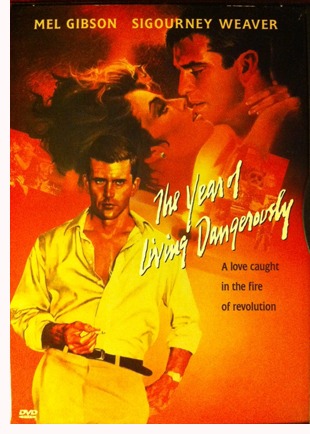
Remember the 1982 classic movie, The Year of Living Dangerously? A young Australian reporter (Mel Gibson) tries to navigate the political turmoil of Indonesia during the rule of President Sukarno with the help of a diminutive photographer (Linda Hunt). And a young Sigourney Weaver played Jill Bryant, a British Embassy officer. Deliberately putting themselves in harm’s way made a fantastic premise for a movie. But, obviously, it’s not how we should live day to day.
Recently, the International Powered Access Federation’s (IPAF) accident database reported 17 fatal accidents involving aerial work platforms, worldwide, during only the first half of 2012. Seventeen may not sound like a terribly high number, until you take into account the 17 crews who most likely saw their coworkers die, 17 families who planned and attended funerals, and – let’s be honest – 17 legal battles that most likely will ensue (if they haven’t already) for the construction companies afterward. Oh, and let’s not forget the 17 fines that undoubtedly were issued by OSHA.
 Here is the breakdown of those 17 fatal accidents:
- The causes of these accidents were fairly evenly spread: four electrocutions, four overturns, four that were mechanically related, four falls from platforms, and one entrapment.
- Seven accidents involved vehicle mounts, six involved booms, and three involved scissor lifts. In one accident, the machine type was unknown.
- Of these accidents, 11 occurred in the United States, two occurred in the United Kingdom, and one each occurred in Australia, the Netherlands, Singapore and Spain.
Presenting these findings, the IPAF stressed that the results are preliminary, meaning there may be more to come. You can read more about this by visiting www.ipaf.org/accident.
I write about safety a lot. I know this. And that’s ok, because if a gentle reminder keeps safety top-of-mind for even one reader, I have done my job of educating you about the continuing importance of safety on the jobsite. Be safe out there!
Return to Table of Contents