July 2012 : Government Affairs
Words: Dan Kamys
Government Affairs
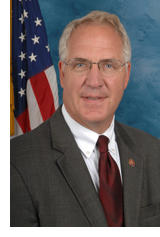 Congressman John Shimkus
How many new rules and regulations are impacting your business?
While the exact number and total cost estimates may vary, it is undeniable that the Obama Administration has proposed hundreds of rules and regulations at a great cost to businesses, large and small.
During the first 26 months of the Obama Administration, a study reported 75 new major (those costing more than $100 million) regulations with costs exceeding $38 billion. A Small Business Administration study found that firms with fewer than 20 employees spend $2,830 more per employee to comply with regulations than firms with more than 500 employees.
In addition, the most recent (April 2012) jobs report from the Department of Labor showed slower job growth than expected. If all of these rules and regulations were to be implemented, job growth would decline even more.
Let’s take a look at a few of the major new regulations being proposed:
- National Ambient Air Quality Standards: Under the Clean Air Act, EPA has the power to regulate six areas. The Obama EPA is tightening the sulfur dioxide emissions category through the Cross-State Air Pollution Rule. While EPA estimates the cost of this rule at between $1.8 billion and $6.8 billion, actual costs could run higher. The U.S. District Court also has put a stay on this rule.
- Boiler MACT: This is a combination of four interrelated rules governing the emissions of mercury, dioxin, particulate matter, hydrogen chloride, and carbon monoxide. While EPA estimates the cost at $9.5 billion, other estimates run as high as $14 billion to implement. The Department of Commerce concluded that job losses due to the Boiler MACT rule could be between 40,000 and 60,000. EPA has postponed the implementation of this proposal.
- Utility MACT: Right before Christmas, EPA announced its plan to limit mercury and other emissions from coal-fired power plants. This proposal has been called the most expensive air rule EPA has ever proposed. They acknowledge a minimum cost of $10 billion, while others estimate it as high as $100 billion – costs that certainly will be passed on to electricity consumers.
- Cement MACT: This EPA rule affects Portland cement kilns’ emissions of dioxins and particulates. It could cost $2.2 billion per EPA, while the industry estimates the real cost at $3.4 billion.
- Coal Combustion Residuals: Coal ash is utilized with concrete to make roads and bridges across the country stronger and last longer.??Analysis has found that if coal ash were labeled as hazardous, this would increase the average annual cost of building roads, runways and bridges in the United States by nearly $5.23 billion. And, this is just one sector. When it comes to electricity usage, analysis by the Electric Power Research Institute shows the cost of implementation between $55.3 billion and $74.5 billion – costs that would also be passed on to rate payers.
As you know, spending more just to fill out government forms or meet environmental regulations that want the air and water to be cleaner than what you started with take money away from hiring new employees or buying new equipment or expanding your business. These proposals all pull money out of economic growth and into compliance, which proponents will claim as job creation, yet we know slows the establishment of long-term job growth.
In these uncertain economic times, government should be stopping its intrusion into your business, so that you can stay in business, much less hire new people.
Another problem that I have even questioned Administration officials about is their lack of consideration of the comprehensive effect of these many new rules and regulations. Some industries will be hit by more than one of these proposals, yet EPA does not take into account the overlap.
I have supported bills in the House, such as the EPA Regulatory Relief Act, the TRAIN Act, the Farm Dust Regulation Prevention Act, the Coal Residuals Reuse and Management Act, the Cement Sector Regulatory Relief Act, the repeal of the Independent Payment Advisory Board in the Patient Protection and Affordable Care Act, and the REINS Act.
All of these bills attempt to slow regulation or stop the implementation of proposed rules and regulations coming out of the Obama Administration. The costs of these are high in time, man-hours, cost to comply, etc. – too costly, in my eyes, as we continue in a morass of economic uncertainty.
Return to Table of Contents