October 2011: Government Affairs
Words: Dan Kamys
Government Affairs
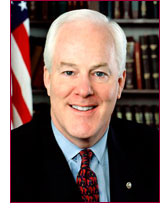 Sen. John Cornyn
Former House Speaker Nancy Pelosi once said that Congress needed to pass the new health care law so the American people can find out what’s in it. Many have since taken her up on that, and they do not like what they see in Obamacare. Seniors on Medicare are alarmed particularly by the new Independent Payment Advisory Board, which could severely restrict their access to treatments and medications.
The advisory board would change Medicare forever. This group of unelected, unaccountable bureaucrats now has been given the power to restrict access to health care for our seniors. They can do so through price controls on medical services that would become law without a vote in Congress.
This board, included in Obamacare, was bad enough to begin with, but now President Barack Obama wants to strengthen it further. After two years of wasteful spending, he sees the new board as the key to reducing Washington’s budget deficit. Instead of reforming our entitlement programs responsibly, he wants to appoint 15 “experts” to balance the budget on the backs of our seniors.
Seniors on Medicare already are discovering what government price controls mean for them. Lower reimbursement rates encourage doctors to limit the number of patients they see, or stop seeing them altogether. More than one-third of doctors in Texas already limit the number of Medicare patients they see, according to the Texas Medical Association. The new board’s price controls only will accelerate that trend, leading to longer wait times for appointments and treatments.
Similar panels of unelected bureaucrats now treat seniors poorly in other countries. A British panel of government “experts” recently denied coverage for a cancer drug available in the United States and 29 other nations. Earlier this year, Britain’s National Health Service reported widespread abuse and neglect of seniors and concluded that its government-run system is “failing to meet the most basic standards of care.”
We should learn from Britain’s mistakes rather than repeat them. And, we also should listen to the voices of Texans. The IPAB has created “immediate uncertainty at hand,” says Scott & White Healthcare in central Texas, for their 12 hospitals and more than 800 physicians. Many more organizations and associations have expressed similar concerns and urged me to do what I can to repeal this ill-conceived bureaucratic board.
That’s why I have introduced the Health Care Bureaucrats Elimination Act, and why I testified on the other side of the Capitol to build support in the House. This legislation seeks to repeal the IPAB completely and defuse this bureaucratic bomb before it explodes.
Opposition to the IPAB already is a bipartisan affair in the House. Rep. Frank Pallone (D-N.J.), for one, is in favor of abolishing this panel. As Pallone put it, “I’m opposed to independent commissions or outside groups playing a role other than on a recommendatory basis.”
Repealing this unelected board of bureaucrats does not mean giving up on efforts to reduce costs in Medicare. A better model is Medicare Prescription Drug Coverage, which has come in under budget by more than 40 percent, by introducing competition and choice into the system.
Several other initiatives at the state level and in the private sector also have cut costs without sacrificing quality or access to care. Congress should take a look at them as well.
Our seniors have paid their hard-earned money into Medicare for years. They deserve far better than to see their health care placed at the mercy of 15 unelected bureaucrats. Repeal of this board is the first step to ensuring that we keep faith with those who have put faith in Medicare.
Return to Table of Contents