May 2011: Government Affairs
Words: Dan Kamys
Government Affairs
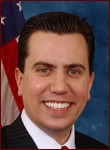 Rep. Dan Boren
We are one year removed from the passage of the Affordable Care Act and nearly two months passed a vote in the House to repeal it. Since that first vote was cast, my constituents remind me at every town hall meeting I hold that they are overwhelmingly opposed to this law. That is why I supported repeal.
They are aware, as am I, that we have many uninsured Oklahomans who need assistance. Many voters also agree that reforms are needed to address the issue of rising health insurance premiums, the staggering number of medical bankruptcies and the burden that health care costs have on small-business growth and job creation.
But as the debate for health care reform moved along in the summer of 2009, the sheer size and scope of what the Obama administration had proposed were more than enough to convince me – and a significant majority of my constituents – that this was not the solution to America’s health care problems.
In fact, a survey conducted by Public Policy Polling in my district in March 2010, just weeks after Congress voted on final passage of this legislation, showed that just 17 percent of my constituents supported the law.
The most disappointing aspect of the health care reform debate is the fact that a majority of Americans support several reforms that Congress could have addressed in a bipartisan and incremental way. Provisions such as preventing companies from denying coverage to individuals with pre-existing conditions, allowing children to stay on their parents’ insurance until age 26 and making it illegal to cancel insurance coverage when a person becomes sick are all common-sense reforms that share a broad level of support among a majority of Americans.
Rather than taking a bipartisan approach and tackling these issues incrementally, Congress and President Barack Obama produced a 2,000-page bill that dramatically expanded the federal government’s role in the private sector, placed burdensome mandates on small businesses and individuals, and increased taxes during an economic downturn.
I have said many times since the economic collapse in fall 2008 that the No. 1 priority for Congress should be job creation and economic expansion. Unfortunately, the leadership in Washington got sidetracked from this priority and, in turn, lost the confidence of the American people.
While many have advocated for a full repeal – which I voted for last month – the president’s veto pen will very likely prevent it. That leaves Congress with the option of trying to improve the legislation, which we have already started to do.
Recently, the House repealed the 1099 reporting requirement that many small businesses in my district, and across the nation, have found alarming. This was a solid first step.
We also are beginning to address the unpopular mandates on individuals and businesses found throughout the law.
Rep. Mike Rogers (R-Mich.) and I introduced the Health Care Waiver Fairness Act. This legislation will allow every small-business owner or average American the opportunity to apply for a waiver from the new health care law if they so desire. The basics of this bill are that, if you like the health care reform law, you can take advantage of it. If you want no part of it, you can opt out.
Finally, tort reform should be addressed in a meaningful way. Without tort reform, the cost of insuring health care providers is likely to continue to be a significant drag on our ability to provide quality and, most important, affordable care.
We can all agree that the health care reform debate was incredibly divisive on both sides of the aisle. But there is still a real opportunity to improve this law in a bipartisan manner.
Return to Table of Contents