April 2011: Government Affairs
Words: Dan Kamys
Government Affairs
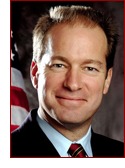 Rep. Peter Roskam (R-Ill.)
Let’s make a bet: Imagine I gave you the task of coming up with a rational tax system. Starting with a blank sheet of paper, I’ll bet that you would create a system nothing like our current one.
In fact, you’d be foolish to take that bet, because there is such broad agreement on the need for fundamental tax reform. A recent Rasmussen Poll showed that only 9 percent of Americans think the United States has the best tax system in the world. There is good reason for that harsh reality.
We need a comprehensive fundamental tax reform overhaul – one that produces a system that raises the necessary revenue for the government to run as efficiently as possible, while removing barriers to private-sector job creation. More specifically, we need a revenue code that is fairer, simpler and no longer hinders our economic competitiveness, all of which cost jobs.
A fairer and simpler tax code would reduce costs for American citizens and job creators. Right now, the tax code often forces employers to make investment decisions based on the tax code, not based on what is best for their business. The tax code should not be used to favor one widget over another or one sector over another.
Ultimately, our economy – and our ability to encourage private-sector job creation – will be best served by a tax code that removes political favoritism.
A simpler tax code will also free up resources now wasted on compliance costs – a major barrier to job growth. The National Taxpayer Advocate reported earlier this year that taxpayers spend more than $160 billion annually complying with the individual and corporate income tax rules. Clearly, this is a major drag on the economy, when those resources could be invested in long-term growth.
The National Taxpayer Advocate also noted that there have been more than 4,400 changes to the tax code in the last decade. On average, that is more than one change per day.
It’s getting worse: Last year, we saw a health care law enacted that will require roughly 16,000 new IRS employees to enforce. We’re headed in the wrong direction. A fairer and simpler system can’t require the same tremendous government spending on enforcement or the tremendous compliance costs forced on private citizens and job creators.
With even Japan now reducing its corporate tax rate, the United States will soon hold the dubious distinction of having the highest corporate tax rate in the world, at 35 percent. To say our tax code puts American job creators at a disadvantage is a serial understatement. With unemployment still at 9 percent and bleak projections ahead, we simply can’t afford to allow our tax code to continue to hinder our competitiveness. It costs too many jobs.
With a 35 percent tax rate, American companies continually are less competitive compared to their foreign competitors. The 35 percent rate also makes it likely that foreign-based employers will invest elsewhere in the world. In fact, the United States taking no action and simply maintaining the status quo will ensure we continue to fall behind.
In 1990, the U.S. corporate tax rate was below the global average. Twenty years later, we are poised to become the highest taxed country in the world. This is a recipe for losing the future.
What’s more, our backwards system actually traps American money overseas. When global American companies are successful outside the United States, it means they create jobs back in America to support those foreign operations. Yet when those employers are successful, our current tax code actually discourages them from investing their overseas earnings back in America.
The United States is one of only five industrialized countries to tax the worldwide earnings of companies headquartered in its country. Coupled with the world’s highest corporate tax rate, our tax code punishes American companies for success time and again. Rather than enticing our companies to stay, our tax code actually encourages them to head elsewhere for a better environment to create jobs.
The current tax system continues to create barriers to job creation. Fortunately, under the current leadership of the Ways and Means Committee, House Republicans will articulate to the American people reforms to our tax code that will remove barriers to job creation and put us on a path of sustained economic recovery.
I’ll bet you again that’ll be an appealing proposition.
Return to Table of Contents