Cleaning Power
Words: Dan Kamys
Cleaning Equipment
Pressure washers make masonry cleaning applications fast and easy.
By Dan Leiss
Many view cleaning as a simple process. We wash and wipe every day without giving it too much thought. But what if the job is more complex than a simple scrub down? While basic cleaning is somewhat of an automatic process, tough cleaning jobs require a timesaving pressure washer and even some problem-solving tactics.
The elements of cleaning
First, one needs to know what type of contaminate is involved. Common contaminates include those that can be seen such as dirt and grease, to those that can’t be seen, like bacteria and germs. Knowing these facts will dictate whether the job needs something that will provide a quick rinse, or if it will require a machine that will kill germs and sanitize as well.
The next step is finding the combination of elements that will best solve the problem. There are four basic elements of cleaning: flow, chemical, temperature and pressure. Changing one element, even slightly, significantly affects the other three. Furthermore, any deficiency in one element can be made up for by a stronger presence of another. When the elements are thoroughly understood, one can come up with the best solution to a given cleaning problem.
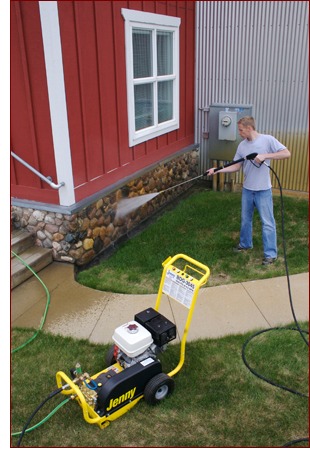 The best way to introduce the four elements is to visualize a basic cleaning task, like someone washing dirt off his hands. The cold water from the faucet (flow) combined with rubbing his hands together (pressure) would be sufficient to remove the dirt, but would not provide a thorough cleaning. In order to accomplish this, adding some soap (chemical) and warmer water (temperature) would be effective and also speeds up the process.
But what if instead of dirt, the hands are covered in a greasy deposit? In this case, flow, pressure, chemical and a cold temperature of water would not be enough to provide a thorough cleaning, as cold water does not effectively remove grease. To clean away grease, hot water combined with the other elements is required.
Now let’s take this hand-washing example and change it a bit to illustrate the fact that any deficiency in one element can be made up for by more effort from another. Imagine the man’s hands are not covered in light dirt or grease, but this time are caked with mud. The presence of all four elements would be necessary to efficiently clean the mud off his hands.
But what if hot water isn’t available? His hands can still be cleaned thoroughly, but not without more effort from the other elements. Maybe using a stronger soap or scrubbing his hands together more briskly to create additional pressure would make up for the low temperature. Both of these would be effective ways for the other elements to work harder and compensate for the one that is lacking. Conversely, if a weak chemical were being used, added pressure and the use of hotter water would make up for the deficiency.
Obviously, nobody is going to need a pressure washer to effectively clean his hands. But this example breaks down the cleaning process, so it can be understood and applied to real life situations.
For instance, if a person just needs to quickly wash away dirt and other debris from a wall, a cold pressure washer would make sense. Relying on high flow and water pressure, cold washers are not able to heat water, so they are best suited for quick surface cleaning and tasks such as spraying mud or dirt off objects or structures. Certain chemicals can also be incorporated with the use of a cold pressure washer if desired.
Whether prepping surfaces, killing germs and sanitizing, or simply cleaning for appearance sake, it is important to remember that there will always be one combination of the basic cleaning elements that produces the best results.
Masonry tips
General-purpose cleaning situations requiring a pressure washer are too numerous to count, and many different cleaning circumstances exist within the masonry industry itself. The surface to be cleaned could be new construction, or it could be old construction, in which case one would need to account for the varying levels of weathering and erosion the surface has already experienced. The material could be stone, brick or concrete. Masons should take these types of factors into consideration when identifying the proper combination of elements for their cleaning applications.
Some considerations are fairly universal to any masonry-cleaning job. For instance, the surface to be cleaned should always be inspected for cracks, and any cracks located should be patched and allowed to dry for several days before pressure washing. If cracks are not repaired, the pressure washer could easily end up pushing water and chemical behind or below the surface, potentially causing far more long-term harm than short-term good.
Once ready to perform the cleaning, make the appropriate adjustments to the pressure washer to suit the specific application. Again, many different factors will come into play, but as a general rule, masons will want to use higher pressures for concrete and slightly lower pressures for brickwork and natural stone. The nozzle tip is another variable to consider. Many experts recommend using a tip that provides a wider spray pattern, since a narrow-angled spray could potentially damage the masonry surface, as well as mortar joints.
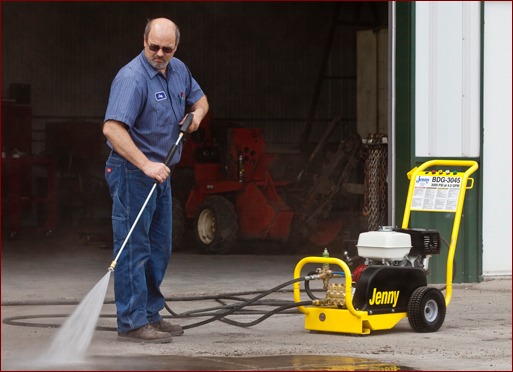
Regardless of the particular settings and accessories, a quick test run is the best way to ensure the chosen solution actually will work without causing any adverse effects. Start the test run by keeping a safe distance from the surface to be cleaned until determining you can or should move closer to properly clean the surface.
Following the use of any chemicals, it’s wise to complete the job by rinsing away remaining suds or residue from the surface. And, even if no chemicals are used, it’s still a good idea to go over the surface a second or third time to wash any remaining particles or debris. Keep in mind throughout the process that pressure washing really is a science. If you don’t know the best course of action to take, consult an expert.
Return to Table of Content