One Contractor's Take On Efflorescence Removal
Words: Hank Johnson
Words and Photos: Hank Johnson / HJ`s Stone Artistry Restorations LLC
In my experience as a stone mason of 45 years , I've noticed this white and sometimes brown calcified crystal called EFFLORESCENCE.
It's that stain that you can see leaching out of masonry, concrete, stone and brick work. We masons know what it looks like. To combat it and control it is a task at hand. I tried numerous products and many of these products are toxic - one splash in your eye can be catastrophic.
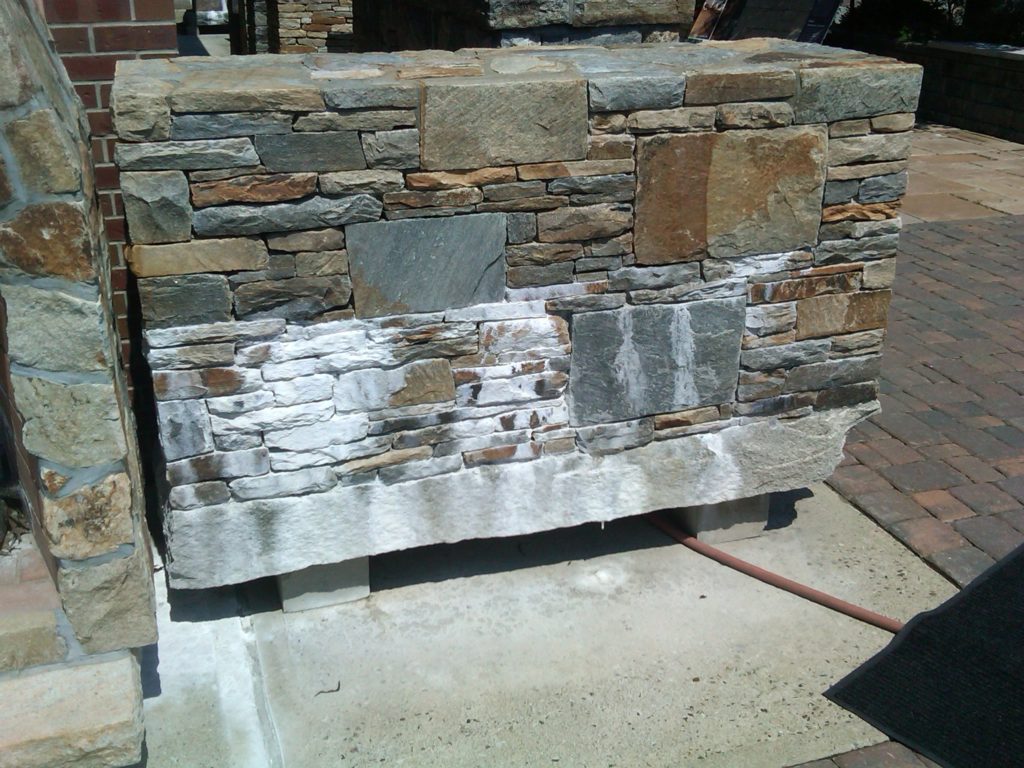
I use an organic acid salt developed by Fine Organics Corporation. This is how successful I've been cleaning this clingy substance since 2006.
Using this particular acid, you treat it as carefully as any other product. I use vigorous amounts of water before and during the process. There's no need to dilute F.O. 3024 SVⓇ unless you were using it on marble or like.
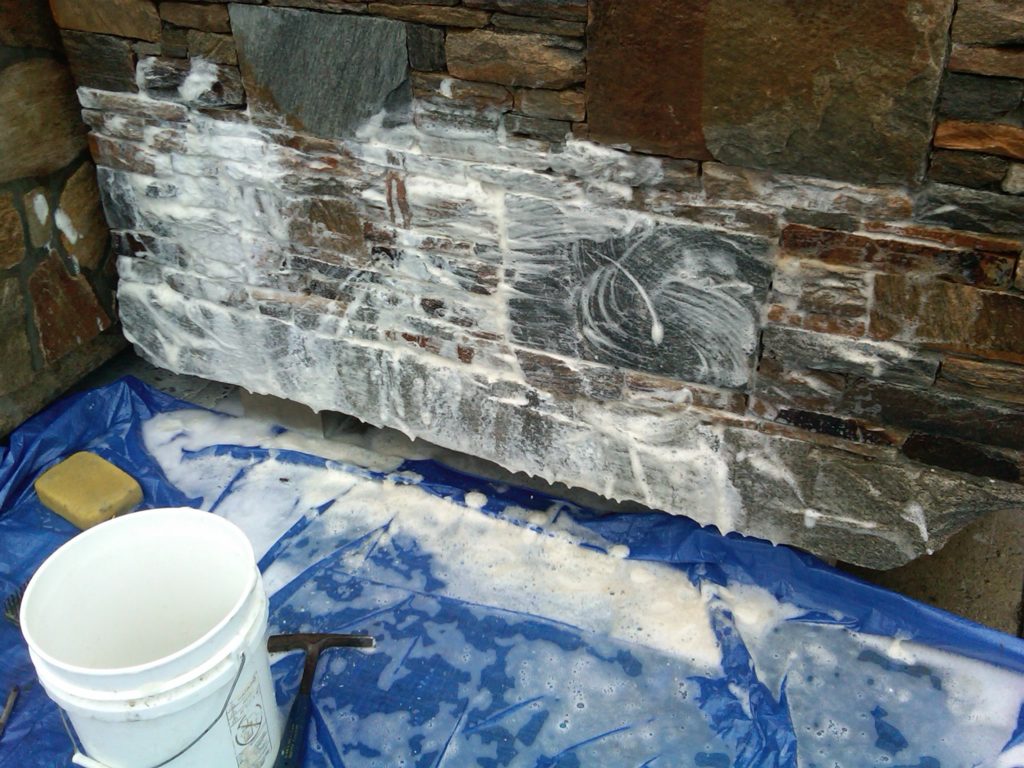
I attack the more tenacious efflorescence with a grinder wheel first, get the surface area as low as I can, then wet the area with water and squirt the acid directly over the efflorescence , rinse off and sometimes repeat the process . When cleaning granite efflorescence tends to cling on and the craggier rock. I've cleaned pool tile, stone chimneys and veneers, stone walls, concrete walks and walls, bluestone patios- granite patios , and brick walls. Any place where moisture is prevalent - open joints and poor designs, let water into and behind the face work, adding freeze thaw cycles and as it leaches into the open, you see white staining which can get very thick over time, eating away at your copper gutters and roof tile.
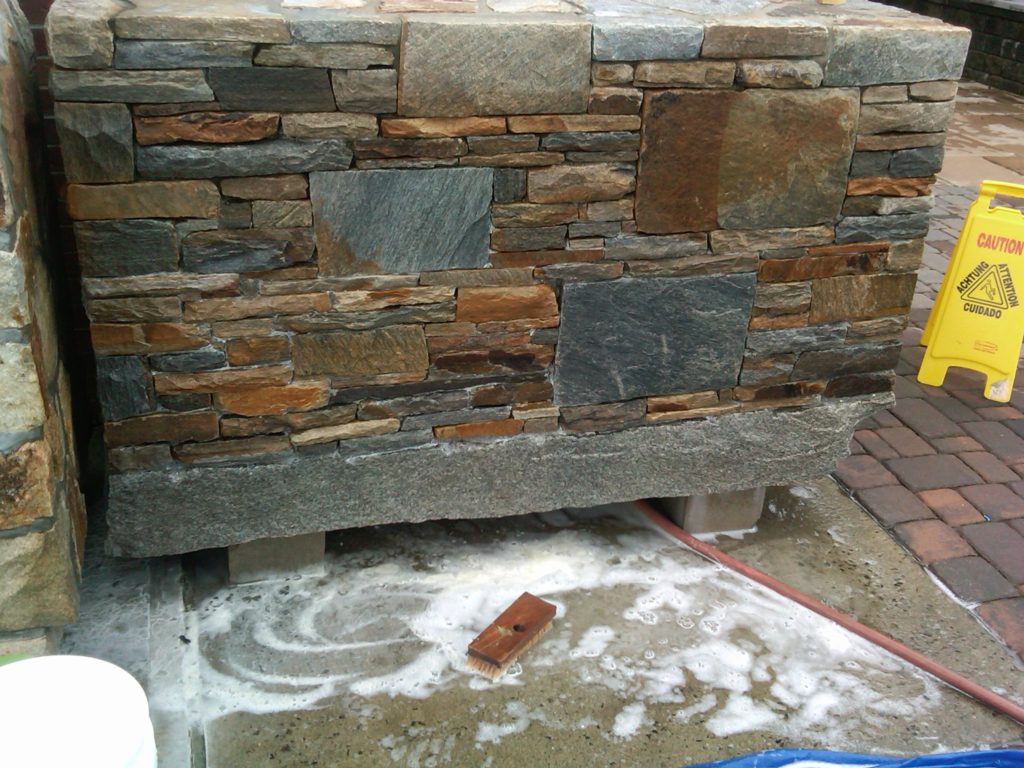
I was asked by O&G Industries in Danbury, Connecticut to clean their stone detailed panels in their outside showroom. Other contractors tried to remove the efflorescence with other acids with no luck on removing it. I only used the organic acid with no machinery, and I removed it in flying colors. There are plenty of cleaners out there, plenty of methods and new expensive ideas on removing the stuff, I'm just stating my successful methods.
Removing efflorescence from brick, we all know that brick is porous, high velocity pressure washers work and sometimes don't work in our favor. One in particular, removal project on a brick wall, “what goes in must come out” - Cleaning surface efflorescence over brick worked beautifully until it dried from the outside in and the efflorescence came right back. Best what I do is just spot clean the areas by hand, sometimes grinding the joints to extract it. It will continue till the mistakes are repaired.
We've all spoken about cleaning the stuff but how about how it forms and trying to prevent it from happening. Mortar joints using a lime base so the mortar doesn't dry too hard. Portland cement dries too hard and cracks appear between the stone and the joint, allowing water to get in and create havoc.
Using additives in mixes can cause future efflorescence. Some winterization products can cause it. I'm finding other masons that build walls, pick up scraps of stone cuttings and use it as fill- creating voids where moisture can accumulate. It's common practice. Flagstone patios, I've seen more efflorescence on this material in the past 15 years. Seems like more every year I get calls on. Start at the bottom. Seems like no one uses a vapor barrier before concrete is poured on top. The stone is adhered to the bed and moisture comes up from the bottom. Sometimes you may see “picture framing” within the bluestone. The joints will turn white, and the accumulated moisture will travel to an outside wall or the stone and bluestone steps that someone just paid to be put in 2 years prior. After treatment of these stone decks, I recommend waterproofing them.
About The Author
Hank Johnson Owner / President
914.552.0063
stoneartistryrestorations.com