From Hot to Cold: Caring for Hardscapes in Any Climate
Words: Joe Raboine
Words and Photos: Joe Raboine, Director of Residential Hardscapes, Belgard
Hardscape products are used in a variety of outdoor living applications – from patio floors to retaining walls and driveways. With a variety of colors, textures and patterns to choose from, hardscapes make outdoor living spaces feel cohesive and complete.
But once the products are designed and installed, it doesn’t mean the job is finished. Basic maintenance preserves the look and performance of hardscapes, especially in various climates and weather conditions.
Here are a few tips for caring for pavers in any season, which you can share with your clients or include in your business offerings.
Beat the Heat: Spring & Summer Paver Care
Light seasonal maintenance is highly encouraged to keep pavers looking like new. As the weather gets warmer through spring and summer, it’s important to engage in routine care, whether your client has newly installed hardscapes or an existing installation.
For a new paver installation, be sure to use polymeric sand in the joints. Polymeric sand is similar to grout as it provides a solid joint. This joint will prevent sand migration, as well as help with weed management.
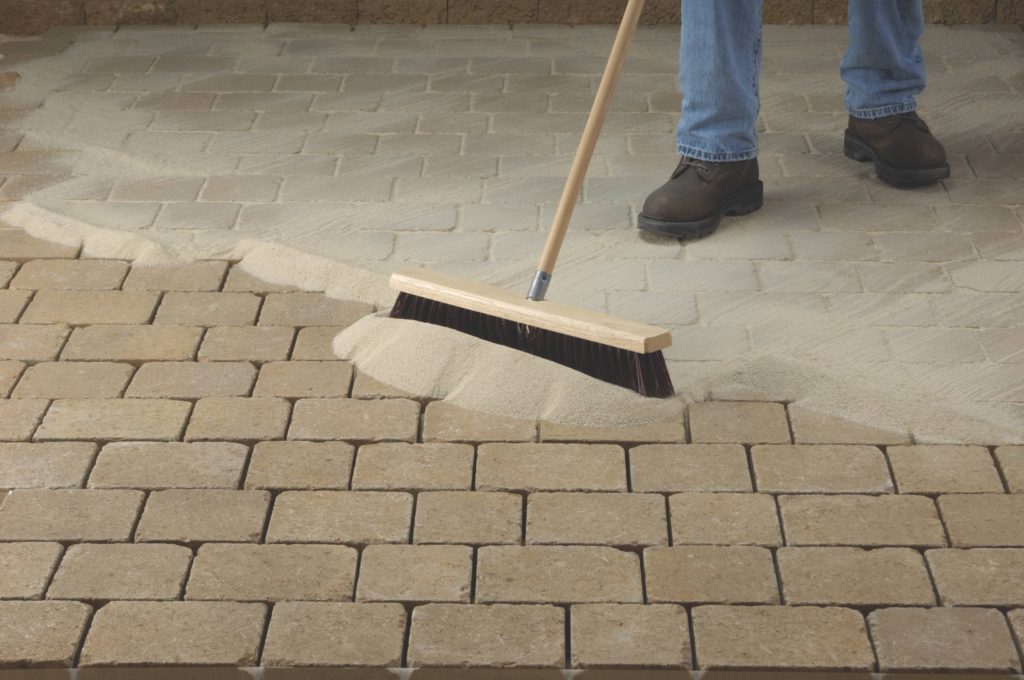 Using broom to spread polymeric sand on concrete pavers.
For an existing installation that uses just sand in the joints, there are a couple of ways to minimize needed maintenance. You can apply a sealer that also will firm up the joints, much like polymeric sand. Before applying a sealer, the area must be thoroughly cleaned.
Another alternative is to spot treat any weeds that may show up. If the client prefers to use chemical-free treatments, there are several solutions available – such as using very hot water to kill weeds.
Routine hardscape cleaning is relatively simple and can be done DIY or by professionals. Whether a crew or the homeowner is tackling this project, there are important steps to keep in mind. It’s best to test any cleaning solution on a small area to ensure there is no damage to the paver and that the product will achieve the desired results. After the entire area has been cleaned, it should be rinsed thoroughly.
If a client has especially tough stains on their hardscapes, make sure to select a specialized cleaner formulated to treat that stain. There are products available for a variety of stains – organic stains (like mildew or moss), grease stains (motor oil, barbecue, etc.), rust, paint, tar and rubber. While you should still apply to a test patch, these cleaners are made specifically for hardscapes and masonry and should not affect the color or tone of the product.
In any case, a well-installed and well-maintained paver installation can last for decades with minimal maintenance.
Protection from Winter Chill
When fall and winter approach, especially for clients located in cooler northern areas, the most beneficial thing to do to keep their pavers fresh is applying a proper paver sealant. Like any exterior product, the freeze cycle of water and ice can degrade the surface of pavers over time, but sealer helps prevent damage from occurring. It is important to note that, depending on the sealer used, it should be applied every five to ten years – too many applications will leave a film on the surface of the pavers, which may cause discoloration.
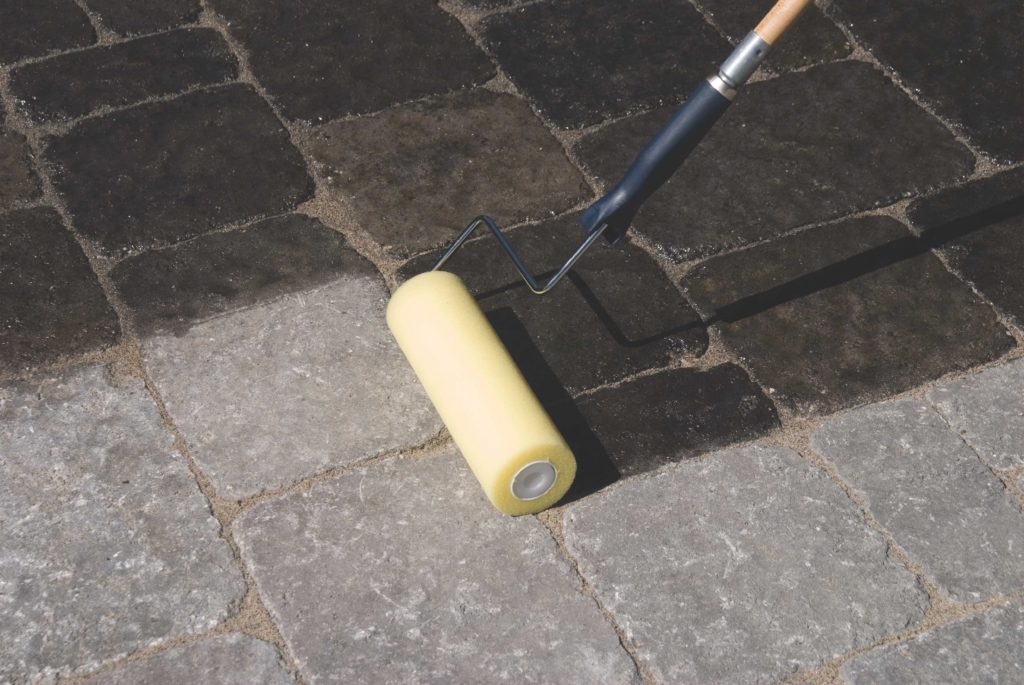 Applying solvent-based sealer to pavers with foam roller
If your client hasn’t kept up with routine maintenance and there is visible weathering and neglect, you can use a tinted sealant to give their pavers new life. These semi-transparent, semi-gloss sealants are formulated to rejuvenate hardscapes back to their original shade – or you can choose a new color if the client is looking for a change.
Aside from sealing, the key winter tip to pass along to clients is to consider what de-icing agents they use on their outdoor spaces. Standard rock salt is not recommended, as continued use of this substance can accelerate surface wear and damage pavers over time. They should choose de-icing products that won’t cause damage to the pavers.
Keeping Hardscapes Refreshed Year-Round
Traditional pavers typically don’t require a great deal of maintenance, but adhering to routine care for each season will keep your clients’ hardscapes looking their best any time of year. Whether they opt to go the DIY route or enlist the professionals, share your guidance and expertise, so their outdoor space stays beautiful, no matter the season.