Creative Design: Transforming Stone into Functional Art
Words: Derrick Hackett
Words and Photos: Derrick Hackett
Have you ever looked at a piece of stone and thought, “Wow, that is a remarkable and unique looking stone?” Have you ever thought of doing something out of the ordinary with that stone, like bringing it home to use on your desk as a paperweight? Maybe you’ve even found a larger stone that was uniquely shaped or had attractive colors and lugged it home to use a doorstop or as a feature in your garden. Maybe you’ve passed a piece of stone on a hike and thought about the possibilities beyond its current location. Since the beginning of time, stones of all shapes and sizes have been used as functional tools and functional art.
There is one unique use of stone that I stumbled upon as a mason contractor in the heart of the Adirondacks. Consider for a moment using one of Mother Nature’s exceptional stones to add the rejuvenating moisture from the outdoors into your home. I came up with this idea to use natural stone as a humidifier and to expand the heat source in our 1822 historic stone farmhouse during our frigid winter months. The idea originally came to me while I was fulfilling a contract through my masonry business.
I was tasked with building a brick base for a new public-school sign in the rural town of Keene, New York. The town of Keene came into existence in 1808 with the splitting of towns Jay and Elizabethtown. Keene is famous for its mountainous and rocky terrain challenging even the most talented climbers and hikers. The school was chartered in 1808 as well and is still thriving today with a wonderful combination of the past and the present. This is where my stone bowl story begins.
I started the Keene School contract by removing the weathered brick planter that certainly had a story to tell. I hand-dug approximately 5’ by 8’ by 5’ of the old river bed that formed the historic town. Each load of stone revealed historic river rock that simply screamed of potential beyond being dumped as clean fill never to be thought of or used again. We strategically loaded and unloaded the stone, trying not to damage what history had preserved well beneath the surface of the earth.
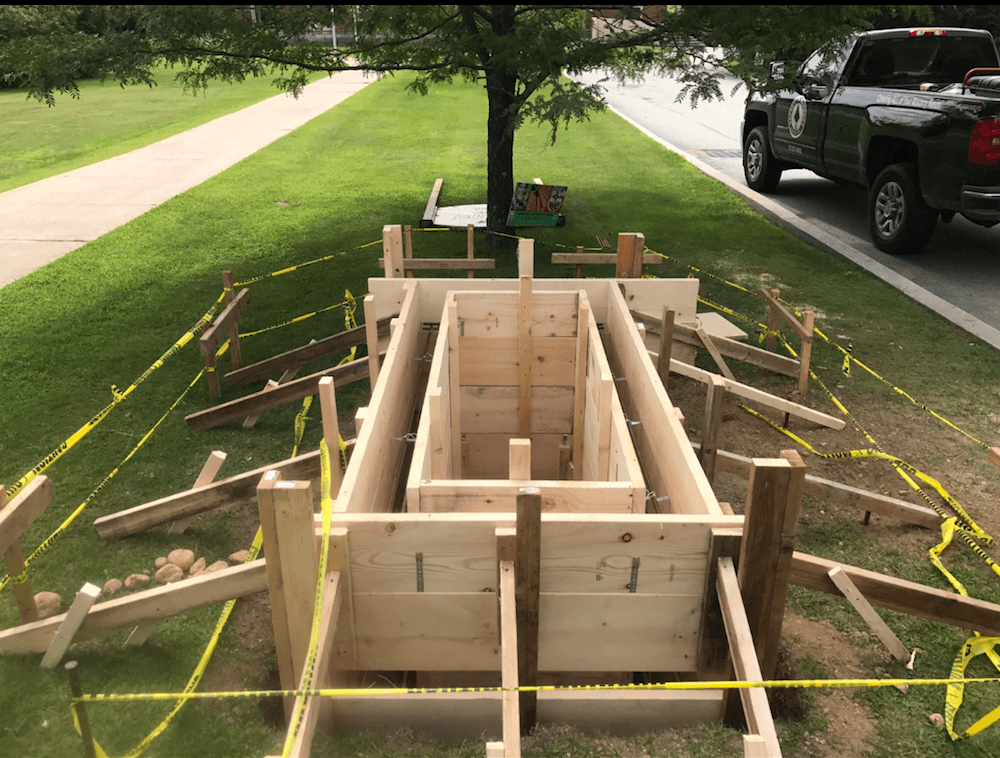
Throughout the whole process, I kept thinking about how amazing my future fireplace would be with each unique stone that hadn’t been revealed since before the turn of the century. As my imagination continued to place each stone, I closed up the historic hole with proper footers and drainage. I worked tirelessly to lay each brick in perfect formation to receive the new sign. I finished the base in time for the new sign, which continued the rich history of the historic Keene Valley Central School. Still, I thought of the harvested stone.
After completing the job right before the start of the school year, fall came as it usually does with a bitter reminder of our cooler temperatures. As we fired up the woodstove, we placed our weathered ceramic pot filled with water on top of the stove to keep as much moisture in the air as we could. I watched as the water quickly evaporated, and we constantly filled it back up only for it to disappear. It was then my stone treasure, and my need for the natural moisture of the outdoor air became one idea.
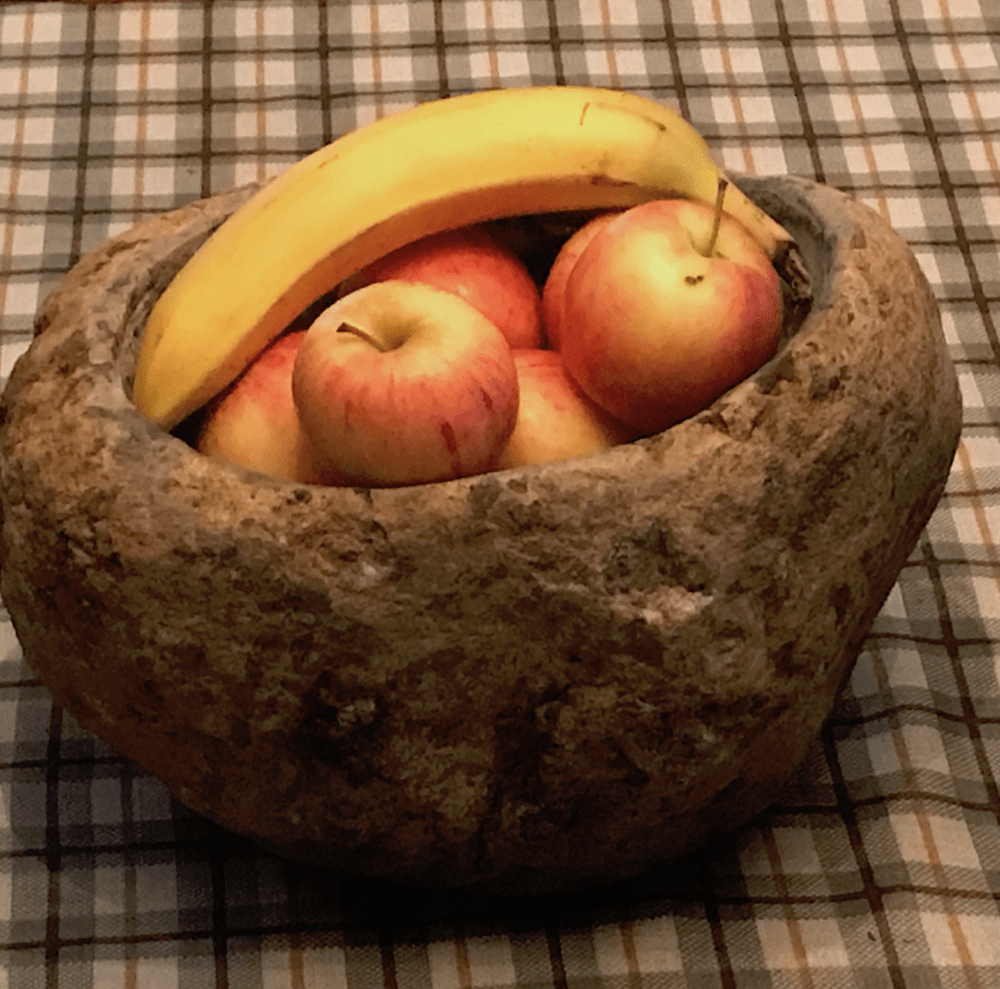
I wondered, is it possible to take one of the exquisite river rocks and turn it into a bowl that could naturally hold water atop my wood stove? I soon found myself exploring the possibilities beyond the natural stone. Filled with excitement and intrigue, I went outside and grabbed what I thought was the perfect stone and started the carving process.
First, I created a workbench that would steady the stone as I transformed it. I leveled one side of the stone using a 4 ½” grinder with a diamond blade to create a solid bottom. I then flipped the stone and started to create the mouth of a bowl. I ground and chiseled in a stone dust flurry until I reached the depth that I was looking for. The stone soon transformed into an exquisite bowl. At this point, I started to polish the inside of the newfound bowl meticulously. For the next five or so hours, I polished the mouth of the bowl, moving from a 50-grit diamond polishing pad to a 3,500 girt polishing pad.
As I polished in that last hour, the shimmer of the stone began to emerge. I finally stood back and admired the artistry. I had created a natural stone bowl that could function as a humidifier but also emanate heat for hours after. The ability to take a natural wonder from Mother Nature and turn it into a forever piece in a home is profound, to bring the outdoors in offers the homeowner a special relationship with nature.
After completing this first masterpiece, I sat back and thought about what it would take to continue this process to make a washbasin or maybe even a stone sink. I eagerly grabbed another stone from the pile and started to work on crafting my first washbasin. This bowl needed to be deeper and wider to accommodate its intended purpose. I took my time and worked the insides with my grinder making sure not to overcut into the sides, thus damaging the pristine interior. Once I got down to my desired depth and width on the inside, I surveyed what still needed to be done.
I then determined if it was smooth enough by feeling for any imperfections or grooves. This was a meticulous process that involved using polishing pads infused with diamond specks, which were used to gently break down the stone to reveal a natural smooth finish. Similar to the humidifier, I started with a 50-grit and worked my way to a 3,500 grit to achieve almost a glass finish. I soon found that I liked to spend more time polishing the washbasins and sinks. Most people would see the sheen and want to feel the inside of the carved-out stone in amazement of its transformation. These stones soon were transformed into functional and unique pieces of art that are certainly one of a kind.
To finish off these washbasins or sinks, it is essential to have a craftsman that understands stone and can drill an accurate hole for the drain, and the homeowners desired fixtures. Polishing natural stone takes time and sustained energy. It takes focus and a vision of what is possible. It takes perseverance and a willingness to start over if necessary.
It is certainly not a process that resembles manufactured products or a template that can easily be duplicated at the local hardware store. A stone selection is unique and personal. The homeowners need to be an intricate part of this process. Indeed, no other feature in a home is quite as exquisite and in touch with nature as a stone plucked from the earth and potentially from history and transformed into a functional piece of art.