Luxury in Vail
Words: Dan Kamys
??Mortars, Mixtures and Staining
By Frank Owens
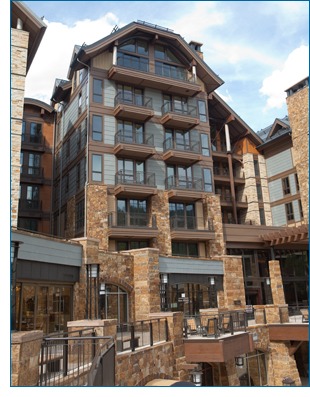 Since it was incorporated in 1966, Vail, Colo., has established itself as a premier destination for people building high-end, luxury second homes as well as avid skiers. So, when plans were announced for a new, mixed-use Solaris Residences development, both local and national media took note.
With an ambitious plan to offer residents “luxury mountain living,” contractor The Weitz Co. and sub-contractor The Gallegos Corp., a specialty masonry contractor, turned to The QUIKRETE Companies as a partner whose products could help bring “the height of luxury at Vail’s premier address” to fruition.
One of the key architectural features of Solaris Residences is its dry stack, natural stone walls, designed to fit within the natural landscape of Vail. To ensure the stacked stone remained in place for years to come, crews relied on QUIKRETE’s Mason Mix Type S mortar, a contractor-grade mix that achieves 1,800 psi, and Core-Fill Grout – Coarse.
“Dry, stack stone walls are really an art form, but it’s critical they have a strong bond to guarantee they will stand the test of time, especially in a harsh mountain climate such as Vail,” says Brian Harms, QUIKRETE regional sales manager – bulk products. “By using a packaged product such as Mason Mix Type S mortar, crews could mix the amount of mortar they needed, thereby eliminating the need for large-scale mixing operations and, ultimately, reducing waste.”
Located in the heart of Vail Village, Solaris Residences features a combination of residential and commercial space. The project was completed during the summer of 2010. The property’s 77 condominiums range from 900 to 6,500 square feet, with the average unit falling in the 2,500-square-foot range. The residential units – which mostly are second homes – start at $1.5 million and exceed more than $15 million.
In addition to the residential units, 20 commercial spaces exist for retail shops and restaurants, surrounding a central, half-acre common plaza that features an ice skating rink.
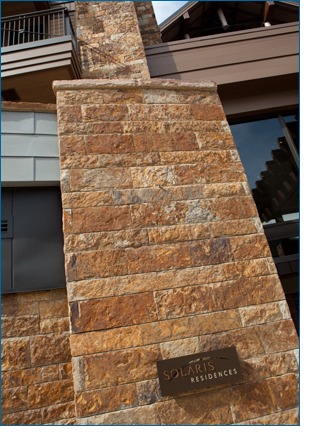 As part of the project, workers used 7,140 bags of 80-pound QUIKRETE Core Fill Grout – Coarse, and 27,552 bags of 80-pound QUIKRETE Mason Mix Type S mortar.
QUIKRETE Mason Mix Type S is a high-strength, commercial-grade, dry pre-blended mixture of Portland cement, hydrated lime, masonry sand and other ingredients selected especially for masonry applications. Core-Fill Grout – Coarse is a properly proportioned mixture of Portland cement, graded sand, coarse aggregate and other ingredients designed to provide a flowable grout for filling masonry cores and structural walls, requiring only the addition of water.
“Since QUIKRETE Mason Mix Type S is pre-blended, it eliminates the need for sand piles and pallets of cement, allowing crews to work in tight areas with a small footprint,” Harms says. “In addition, since the product eliminates the need for jobsite mixing, the pre-blended product saved time, improved productivity and also assured that the mortar was consistent and met the project’s requirements.
“Mason Mix Type S and Core-Fill Masonry Grout are the perfect solutions for a project such as Solaris Residences,” he adds. “These products are well suited for workers’ needs, allowing crews to mix material in the batches they needed – no matter how large or small – and finish their work as quickly as possible.”
Return to Table of Contents