MCAA Masonry Hall of Fame 2019: A Sit Down With Four Inductees
Words: Cass Stern
Words: Cass Stern and MASONRY Magazine
Photos: Bruce Starrenburg
On Thursday, January 24, 2019, during the World of Concrete and MCAA Annual Convention 2019, MASONRY was able to sit down and conduct some face-to-face interviews with four of the six pillars of the masonry community being honored: Alonza “AC” Lewis, Angelo Tedesco, Kenny Foeste, and Mike Sutter. These four men are powerhouses in the masonry industry, and took some time from their busy schedules at the convention to reflect back on their previous careers and experiences and how just meaningful this honor is to them.
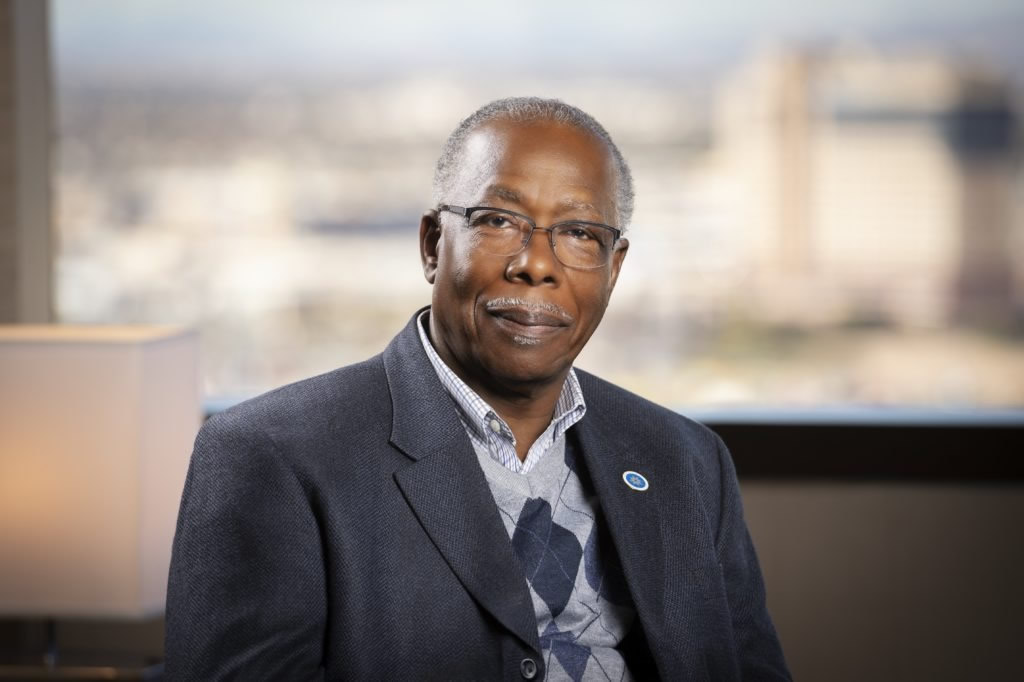
Alonza “AC” Lewis
Instructor- Spring Valley High School/Lexington High School/Midlands Technical College President of VICA (now SkillsUSA)
 MCAA World of Concrete 2019
MASONRY Magazine: First, I’d like to congratulate you on being inducted into the Hall of Fame.
Alonza Lewis: Thank you very much.
M.M: How did you get started in the masonry industry?
A.L.: I got started in the masonry industry when I was in high school. I don’t know how much you know about South Carolina, but I grew up in a rural part of South Carolina. Which was in Sumter Co. it was basically farmlands, and I grew up on a farm. When I was in the ninth grade, we had two choices: either we take agriculture, or we take up brick masonry. Those were the only two options we had, and by growing up on a farm, I didn’t want to continue in the farming business so I chose brick masonry. That’s how I got started at it, in the ninth grade and I’ve been doing it ever since.
M.M.: Can you tell us how you got to where you are now?
A.L.: When I graduated from high school. I went to Denmark Tech, which was in Denmark, South Carolina, and I took up brick masonry. I got an Associate Degree in brick masonry, after graduating from Denmark Tech. I went into the masonry business as an apprentice. Let me backup just a little bit, Denmark Tech was four semesters in total. So, it was a two-year course, and in my fourth semester I was able to go out on co-op. Which meant I didn’t have to go to class at the school. I was able to work in an apprentice program, and I worked my way up to where I am today. Now, there were some lumps in the road, and there were some bruises, but we worked through it.
M.M.: Can you tell us about some of those lumps and bruises?
A.L.: I’ll back up just a little bit farther from that. After going through my apprentice program, there was a gentleman that came to me and wanted me to [enter into a] partnership with him. I did, and we worked fine together. When I say the lumps and the bruises, we [our company] grew kind of fast and we brought in a third partner. This was when our personalities didn’t click because I take a lot of pride in my work, and that third guy was all about production. So, that’s one of the things that kind of drew us apart, and then I spilt off and went on my own.
M.M.: Were you still doing your business?
A.L.: Yeah, I continued to work my business, and then I got to the place where I couldn’t find the caliber of masons that I wanted to work for me, because one of my trademarks was pride. So, I had an opportunity to go into teaching masonry. That’s when I found my niche and my love, because I was able to put my trademark on a lot of those students. When they got out of high school, they were able to take pride in their work, and do the things that I would like to be done as if they were working one of my jobs. As a matter of fact, I was able to have some of the students do work for me part-time while I was teaching. That was a real rewarding part of the masonry business for me.
M.M.: What is it like training and teaching the next generation in the masonry industry?
A.L.: Well, it was good when I first started, because the kids back then in the early 70s, when I started teaching are so much different than the kids today. The work ethic was different, I guess that has a lot to do with their parenting, and they really wanted something out of life. This is not so much the case today. The kids are tied up with social media, video games, and the work ethic is just not there.
That’s one of the hardest things now, the younger generations that are going into the masonry business, aren’t getting motivated to do quality work and maintain the pride that it takes to become a professional bricklayer. That’s hard, [for] a lot of them, now it’s about the quick dollar, and they don’t really appreciate the legacy of the masonry business. So that’s very, very difficult now. When you find one that has a lot of pride in his work, good work ethic, those are the ones that you try to hold on to, and motivate to continue in the business. But it’s very difficult now.
M.M.: What are some of the challenges you’ve faced?
A.L.: One of the challenges I’ve faced is getting qualified bricklayers, getting enough bricklayers, because believe it or not, there’s a big shortage of masons. I’m up in age now, and I get calls all the time about masonry jobs, and one of the things that they say is ‘your name came to me, are you still doing that kind of work?’ They just can’t find masons, so it’s very frustrating, and very difficult. There’s work out there, but we need more masons.
One of the things that’s very disturbing to me is that a lot of the schools these days don’t offer masonry training. When I started teaching masonry there were a lot of masonry training programs. in South Carolina. Today, I would imagine it’s probably 10-15, maybe at the most. They can’t supply the masons that we need. Some of the programs. have closed down, but not by the mason’s choice. They were forced to be closed because there are other programs. they want to replace and needed the space.
Computers are good, you can’t operate without computers, but a lot of it is moving in that direction. Computers can’t build masonry, the can’t build things. So, that’s one of the things that we face, and it’s very disturbing knowing how many masons we need and we just can’t find them.
M.M.: What advice would you give to someone interested in getting involved in this trade?
A.L.: If you can’t find a masonry school to go to, there are two options. Find out where the local masonry contractors associations are, attend those meetings, talk to some of the other bricklayers in your area that know of some of these training programs. Or mason contractors associations, latch on to a very good company, and work your way up.
Go to the classes after hours, be very focused on the job, work hard as a helper, and get your work done. When you get an opportunity to spread mortar for masons, pay attention to what he’s telling you and work your way up. By doing it that way, you’ll learn it on the job, and develop a sense of pride. Always keep a positive attitude when someone tells you something, that will be a lasting learning experience for you.
M.M.: Tell us about some of your proudest moments.
A.L.: Some of my proudest moments are when I met Jesus Christ, when I met my wife who’s the love of my heart, and when I had my first child, my daughter, she’s another love of my heart. Then my son came along. I’m so proud of those folks, my family. Some of the other proud moments are getting to the job, when you can ride by a building and it is still standing, and you had a part in constructing that building. Those are some of the proudest moments I’ve had. Then the other thing for me is when you see your students are becoming successful in life, when you meet them and they’re still talking about the part I had in instilling and motivating their lives. Those are some proud moments that you don’t ever forget.
M.M.: What would you tell your younger self?
A.L.: Be more patient, develop more of a positive attitude at an earlier age, [and] when it comes to working with your elders. Don’t think you know everything at a younger age because you don't, and be a good listener.
M.M.: What does being inducted into the Hall of Fame mean to you?
A.L.: Oh, it means the world. For me to do resume, but more than that, a biographical sketch of myself, and a committee to look at just some of my accomplishments, and think enough of me to induct me in the Hall of Fame means the world to me. I just can’t think of anything at the moment that is greater than that. Just like a football player winning the national championship or the Superbowl, it puts you up on the top and I really feel good about it. I’m thankful to my peers who thought enough of me to induct me.
M.M.: What is your legacy?
A.L.: Knowing that you’ve done some great things, when you get a phone call, and a person wants you to do a job for them and you say, “well I’m busy and can’t get to it for a period of time.” But they’re willing to wait until you’re available to get to their work because they know you’re not going to cut corners, you’re not going to take short cuts, and it’s going to be done right. So, to sum that up, my legacy is always doing my best at what I try to do. No shortcuts. Be your best, and be proud of your work.
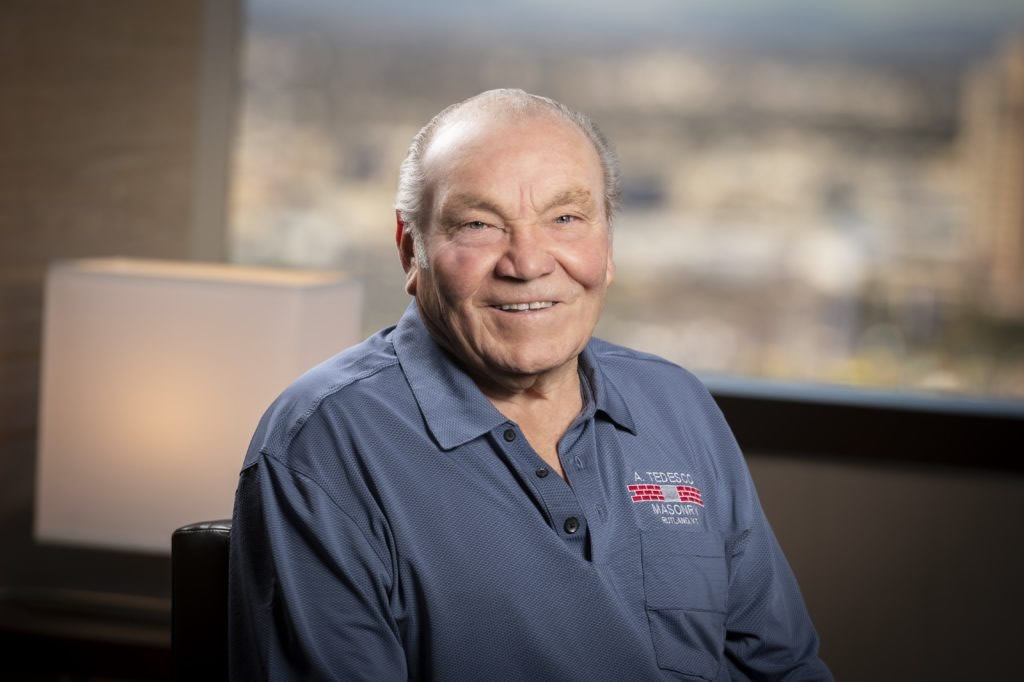
Angelo Tedesco
 MCAA World of Concrete 2019
Founder, President and CEO of A. Tedesco Masonry, Inc.
M.M.: First I want to congratulate you on being inducted into the Hall of Fame this year. Such an exciting time.
Angelo Tedesco: Thank you!
M.M.: Tell us a little about how you got started in the masonry industry.
A.T.: I was working at a machine shop and I didn’t like it. So, I went to work for my brother, who was already a mason. I started from the bottom as a laborer, and then the opportunity came around and I said I wanted to be a bricklayer. He said I was too old to be an apprentice, so two weeks later I joined a masonry union. I didn’t know anything about masonry, you know?
I started as a laborer, and I worked my way up, to learn as much as I could. I worked for different companies, and there wasn’t much work. So, I started to look for work for myself. After a while, my son Angelo Jr., who was thirteen years old at the time, didn’t want to go to school. Anytime he had the chance he would come with me to work. Even when he went to high school, he wanted to be involved in the business. I started to work for myself, you see? I worked hard as best as I could to make a living, because I had my wife and four kids. It was hard to make a living, and I did the best I could. I think I’ve done very good for my life.
M.M.: How did you start your business?
A.T.: I start finding small jobs, and then I went along, you know. I’ve done my work the way it’s supposed to be done, and because of that I had a good reputation, and I started to get bigger jobs. As I went along, I learned the business. My two sons were living far away, but they come back home and learned to be bricklayers. Then we were all working in the family business and it started to grow. My daughter then joined the business and she is a secretary in the company. So, they are all in the business.
M.M.: Have you faced any challenges in the industry?
A.T.: It was hard for me when I first started, you know. I worked 10 to 12 hours a day, and when I started working for myself, and I became really good and did the work the way it’s supposed to be done. I became real busy and I’m one of the bigger contractors in Vermont where I live.
M.M.: Tell us about some of your proudest moments.
AT: So, I’m very happy, with what I’ve done, you know? I raised my family, four kids, my wife, and I’m all set up. I wish everybody would do the same thing I did, you know? Right now, my kids they’re doing very well. I keep telling them: work, make a living, and do the work the best you can.
M.M.: What would you tell your younger self?
A.T.: I would tell myself, I have to do the best I can in my life. Because, I didn’t have anything when I came to this country, and this country is a beautiful if you want to work. I’ve done all kinds of work, and I’m very proud of the things I've done, I’ve done everything the best I could, anytime I’ve had a job I didn’t get to make money, I’d get the work done the way it had to be done, this is how I earned a good reputation.
M.M.: What do you think is the biggest challenge facing the masonry industry right now?
A.T.: Right now, it’s the hunt for good masons, because you can’t get enough people to work in the trade, and no one wants to do that kind of work anymore. Years ago, there was a lot of people who wanted to do this work, nowadays you have a hard time with the people who can work. Then you have a hard time getting the people to work. That’s the challenge right now.
M.M.: What advice would you give to someone interested in getting involved in this trade?
A.T.: No matter what you do, you have to do things right, and you have to work to make a living. A lot of people say you have to learn the business as you go along. But nowadays young guys want to get paid first before they learn anything thing. It’s not like it was years ago, everybody was happy when they found a job. Today it’s different.
M.M.: What does being inducted into the Hall of Fame mean to you?
A.T.: I am very proud of my life, I’m very proud of what I’ve done and accomplished, and I wish all my kids will do the same things as I’ve done. So far, they’re doing very well, and because, this one over here [gestures to son off-screen] he’s named Angelo Jr. He took my place and he knows what to do, I taught him everything I know, and he teaches his brother the same way. See? I have one son who is in the field, another in the field and figures, and one in estimating. They all know how to do masonry work, they all have learned masonry work, and my daughter is a secretary in the company.
M.M.: What is your legacy?
A.T.: Everything good that I’ve done in my life, you know?. I’ve done very well, been married 56 years. My wife and I, will be celebrating 57 years in April. I remember the good memories in my life and everything, I have a nice family and everything.
Kenny Foeste
Owner and President of Kenneth E. Foeste Masonry, Inc.
 MCAA World of Concrete 2019
M.M.: Congratulations on being inducted into the Hall of Fame!
Kenny Foeste: Thank you so much.
M.M.: Tell us a little bit about how you got started in the masonry industry?
Kenny Foeste: Well, I was working on a tow boat on the Mississippi River near Cape Girardeau in Missouri. My wife and I just got married, and about three days after we got married, they called me back on that boat. I rode the boat 30 days, and then we’d get off fifteen. I got my fifteen days off, and I said I’m going to look for me a better job. Sure enough I found one, as a hod carrier, which is now our mason tenders, at two dollars an hour, and I stuck with that til’ I became an apprentice bricklayer.
M.M.: How did you start your business?
K.F.: Ok, I served three years as an apprentice and became a journeyman bricklayer, and I worked in Southern Illinois, Southeast Missouri, and travelled some. Then in about 1973 this old contractor I was working for gave me an old worn out mixer. So, I drug it in on the carport, put a new shaft in it, made paddle blades out of car tires and I commenced to contracting, doing houses. In about ‘75 I bought a forklift and from then on, we went on, and we have a couple cranes now and everything is going well.
M.M.: Have you faced any challenges in the industry?
K.F.: Yes, the biggest challenge we ran into was when we belonged to the union and operating engineers claimed running of the forklifts. So, with some help from other contractors we had to take them to court, and we got help from the MCAA, and we were able to go back with the mason tenders on the lifts.
M.M.: Tell us about some of your proudest moments.
K.F.: Oh, the proudest was, way back in ‘94, my son won The Fastest Trowel on the Block, and won a new truck. Then turned around and won it again in 1996. Then, my grandsons have won the SPEC MIX 500 locally, and are now going to proceed in it tomorrow here in Vegas.
M.M.: What would you tell your younger self?
K.F.: Don’t get too big too fast, and a cheater never wins and a winner never cheats.
M.M.: What do you think is the biggest challenge facing the masonry industry right now?
K.F.: People not coming to work on time, not being interested in how their work looks, and just having a lack of training.
M.M.: What advice would you give to someone interested in getting involved in this trade?
K.F.: It’s a good industry, just come to work on time, and work steady.
M.M.: What does being inducted into the Hall of Fame mean to you?
K.F.: Oh, it’s the greatest thing I’ve ever received. I just can’t hardly believe it. I don’t know, it’s just unbelievable. I feel like I’ve made my goal, worked for 50 years and I got her.
M.M.: What is your legacy?
K.F.: Well, I guess winning those laborers to run the forklifts, taking them to court, we had been battling and there was destruction done to our equipment, and that's all behind us, we won.
M.M.: Would you like to say anything else?
KF: Well, I keep everybody working pretty hard at Foeste Masonry. We have a couple of sayings or mottos we go by, and one of them is ‘if you’re not spreading your mortar by seven, I’m gonna send you home by eleven,’ and the other one is ‘you can lay ‘em fast, you can lay ‘em slow, but if you don’t lay ‘em to the line, you gotta’ go.’
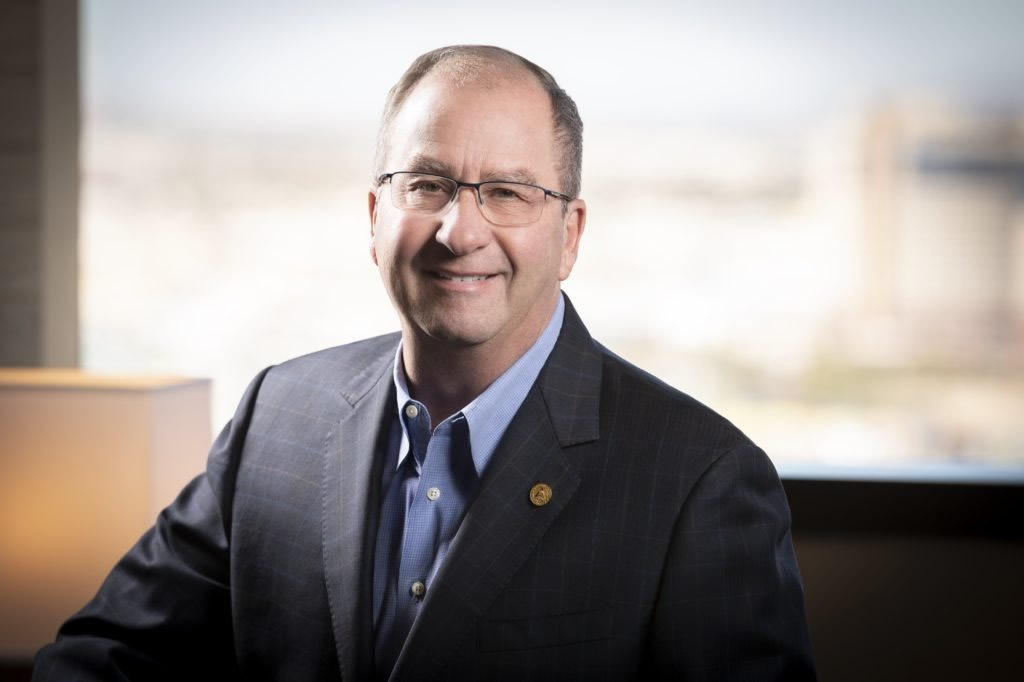
Michael Sutter
 MCAA World of Concrete 2019
Former President/CEO Sutter Masonry
M.M.: Well, first, congratulations on being inducted to the Hall of Fame.
Michael Sutter: Thank you, Bronzella
M.M.: To get us started, why don’t you tell us a little bit about how you got started in the masonry industry?
M.S.: Well, I got started during High School. All throughout junior high and high school, I was sure I was college bound, but by the time I was ready to start my senior year I realized that really wasn’t an option. Financially it wasn't, but academically it was. So, I needed another path. They had just started a vocational program, going into my Senior year. This is where I would go to school half a day and then they would actually help me get a job, and I would work the last half of the day. I thought, well that's perfect, get out of school half day and earn some money, what's better than that?
So, I took that route, and I had an interest in masonry because my father worked for a mason contractor. Not in the trade though, he was a purchasing manager for a large mason contractor in Cleveland, Ohio. I had that interest, so sure enough, I got into the vocational program and I started working for a local home builder. This home builder self-performed many of the trades on their houses, which is very uncommon nowadays, but back then it wasn’t.
I was on the masonry crew, and worked on the basement crew. I only weighed about 125 pounds, but I was on a basement crew in the middle of the winter. I was actually carrying a hod, nowadays many people don't even know what a hod is. But that’s what was used to carry mortar on your shoulder. So I was told I could only carry a half a hod because the hod weighed as much as I did. I started working in basements, walking down muddy planks with a hod on my shoulder, that’s how it all started.
M.M.: You said, you started the vocational program in your senior year, so would that be considered an apprenticeship or did you graduate and then go on to an apprenticeship?
M.S.: Yeah, that was an apprenticeship. I graduated, and then tried to get into the apprenticeship program, but they weren’t accepting any true apprentices at the time. So, I was able still to get into a program, but it was called Apprentice Improver, meaning I already had experience. I actually had some time on the wall, I had some trowel experience so I was able to skip my first year of apprenticeship, and just serve the last two as an Apprentice Improver, and then I received my journeyman's card.
M.M.: Wow. That’s awesome, you kind of accelerated through the first year?
M.S.: Right. It’s not what I wanted, I wanted to start my first year like everybody else did and go to school one day a week. But, that wasn't an option, and it worked out to be a pretty good deal because I was able to skip my first year, and also skip my first year wages and go right up to my second year wages, so that was good too.
M.M.: So, how did you start your business? How did you go about that?
M.S.: My masonry company? Well, just like I talked to all the first-year apprentices when they start the program every year, just like I did last Saturday, I said ‘don’t be satisfied with just the level that you’re in. Now, most of you’ve succeeded going from a mason tender to getting into the apprenticeship program.
Ok, so don’t be satisfied with getting into the apprenticeship program, you have to graduate and then become a journeyman. Once you’re a journeyman, don’t be satisfied with just being a journeyman, always be looking at the next level and how are you going to get there. You’re given the opportunity, now take advantage of it.
So that’s what I did throughout my career, once I served my apprenticeship, became a journeyman, I was already looking at the foreman. Following everything he did, asking as many questions as I could, how do I become a foreman? Well, then I became a sub-foreman, which was the next step with a large company like that. After sub-foreman, I moved right into foreman after a year or two, and then once I became a foreman I really loved it but I wasn't satisfied with that.
What’s my next step? The next obvious step for me was to become a superintendent, which I did, which oversaw the foreman, and then the step after that I wanted to learn how to estimate and to become a project manager. So I did that, and was successful on my journey through my career path, but then after that there was really no place else for me to go but to own my own company.
So, my wife and I started our own company with virtually almost nothing, we scraped every penny together we could. Started our company with no work lined up, nothing, and I left a very good high-paying job to do this because that’s what I wanted to do. Once we did that, there was no going back, and twenty-seven years later we just sold our company a few months ago.
M.M.: Oh wow, that is amazing, that’s kind of like a Cinderella story, it’s so great, I think. It must have made you very proud to start your own business and have it kinda take off, that’s awesome.
M.S.: We’re very proud that we started from scratch, with absolutely nothing, with no work lined up, and we did it all ourselves.
M.M.: Tell me a little bmore about some of your proudest moments?
M.S.: Well, my absolute, most proud moment was when my daughter graduated college. She’s our only child, there was no sons to teach the trade to, so she wanted to be involved in the construction industry and she wanted to be involved in masonry. She went to Arizona State University, graduated with a construction management degree, worked for a general contractor for a period of time, and then came into the family business. So, both when she graduated was a very proud moment, and when she came to work for us was a proud moment.
M.M.: Tell me about some challenges you may have faced in the industry?
M.S.: Well my biggest challenge I’m sure is most contractor’s biggest challenge, is when we went through the Great Recession [in 2008]. It was very, very hard times, a lot of businesses, a lot of family owned businesses just like ours that we are friends with didn't make it through the Recession. We had, not low debt, but we had zero debt, and that’s what carried us through that Recession, but it was still very difficult. It’s fun to build the business, it’s fun to grow the business, it’s not fun to cut the business. We had about 200 employees, and we had to cut back to thirty employees, and thirty employees wasn't enough to even pay overheard.
So, we were losing buckets of money, didn't know how we were going to stop losing, didn't know if we were going to make it through, didn’t know if we wanted to make it through. When you start pouring your own money into the company over a long period of time, you’re thinking at some point we have to stop this, but a good friend of mine from my peer group told me, okay, let's think about it. You started your business with nothing and grew to 200 employees, well now you have thirty or thirty-five. What did your company look like back then when you had thirty or thirty-five employees? You were profitable back then with thirty or thirty-five, so you have to do that again. He was absolutely correct, and we cut everything back to where we looked just like we did when we had thirty or thirty-five employees originally. And we were able to pull through the Great Recession.
M.M.: So now do you have the 200 employees or more?
M.S.: We have about one hundred employees...well, we did, but I just sold my business. But we built it back up to about one hundred employees, and that’s a really comfortable area for us.
M.M.: So, what would you tell your younger self?
M.S.: My younger self? I would tell myself, stay focused. You have a plan, stick to the plan, and just stay focused, keep your head down and keep working hard.
M.M.: That’s probably the best advice I would give to my younger self too. So what do you think is the biggest challenge or challenges facing the masonry industry right now?
M.S.: Well, obviously, I think everybody out there in the Convention would tell you the same thing: it is workforce. So, we have two options: we can sit around and complain about the workforce that’s not there, and everybody realizes that, or we can do something about it. Us in Arizona, we decided to do something about it, and we hit the high schools very heavily, that was where we needed to get these young men and women from, to come in to the industry. I committed a lot of time and money there recruiting and training in High Schools, and last year was our first success and it was huge, and this year it is even bigger, the success we’re having in the High Schools and the people we’re getting out of there.
All it takes is a little time, spend it with these young men and women and let them know what their opportunity is. Give them that opportunity, and then it’s up to them what they do with it, but give them that opportunity. They're a sponge, absorbing all this information you’re giving them, they love the training, they love the trade, and they realize that they can make a good living in this trade for their families.
M.M.: What advice would you give to someone interested in getting involved within the trade?
M.S.: Come on out! Come test the waters. Yeah, it’s hard work, in Phoenix you’re out there in the summer and it’s really, really hot, you’re out in Chicago (where you’re from) and it’s really, really cold, and it’s hard work. It’s heavy work and you get dirty, but it is so gratifying when you get done with a job, and years later you can drive by with your family, or your girlfriend, and you can say ‘I built that.’
M.M.: Yeah, I’ve noticed that a lot. I know whenever we interview anyone, they always say the best part of the industry is being able to drive past a project or a building that you’ve done and say “I built that.”
M.M.: What does it mean, being inducted into the Hall of Fame for you?
M.S.: What it means to me? I don’t even know if I can describe how much it means to me, because so many of the people that are currently in the Hall of Fame, I know so many of them, and I’m friends with many of them, but I admire all of them. To be included in that group, to have my name in that group with them, is overwhelming.
M.M.: So tell me, what’s your legacy?
M.S.: I dont think it’s up to me to say what my legacy is, it's up to others, but I can tell you what I could hope for. I would hope, not the fact that we started our business ourselves, and grew it to a large successful masonry company, and provided for so many families through that business — I’m proud of that. But it’s not that, and probably not that I was able to be in the leadership position in MCAA, although those were fantastic years, and I'm honored to have been chosen to do that. Probably, I would want my legacy to be that I gave opportunity to young men and women, the same opportunity that I got.
M.M.: Thanks so much for taking time to chat with us Mike, and congratulations again.
ABOUT THE MASONRY HALL OF FAME: The Masonry Hall of Fame was created by the Mason Contractors Association of America to recognize and award individuals who have dedicated their lives to the masonry industry.
HALL OF FAME CRITERIA
- Individuals must have had a major impact on the masonry industry, not necessarily with just the MCAA.
- Nominations must state the significant accomplishments of the individual nominee.
- Individuals must have been or be in the industry for a minimum of 25 years.
- Individuals cannot be a current executive officer of the MCAA.
- Masonry instructors can only be submitted by the National Masonry Instructors Association.
- Submissions will be reviewed and voted upon by the Hall of Fame Selection Committee.
- Nominees must receive two-thirds of the eligible votes in order to be accepted into the Hall of Fame.
- Involvement in the industry is open. Nominees can be but are not limited to contractors, employees, instructors, architects, engineers, and association staff.
- Each recipient will receive one plaque.
- A high-resolution photo must be provided for each inductee to be used on the Hall of Fame plaque.